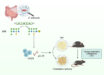
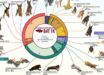
Along with armadillos and anteaters, sloths are members of Xenarthra, the only clade of placental mammals to have originated in South America. In new research, scientists sequenced and analyzed chromosome-level genomes of the Linnaeus’s two-toed sloth (Choloepus didactylus) and the southern anteater (Tamandua tetradactyla). They identified unusual genetic elements tied to energy production in the sloths, offering clues to how these animals evolved the slowest metabolism of any mammal.
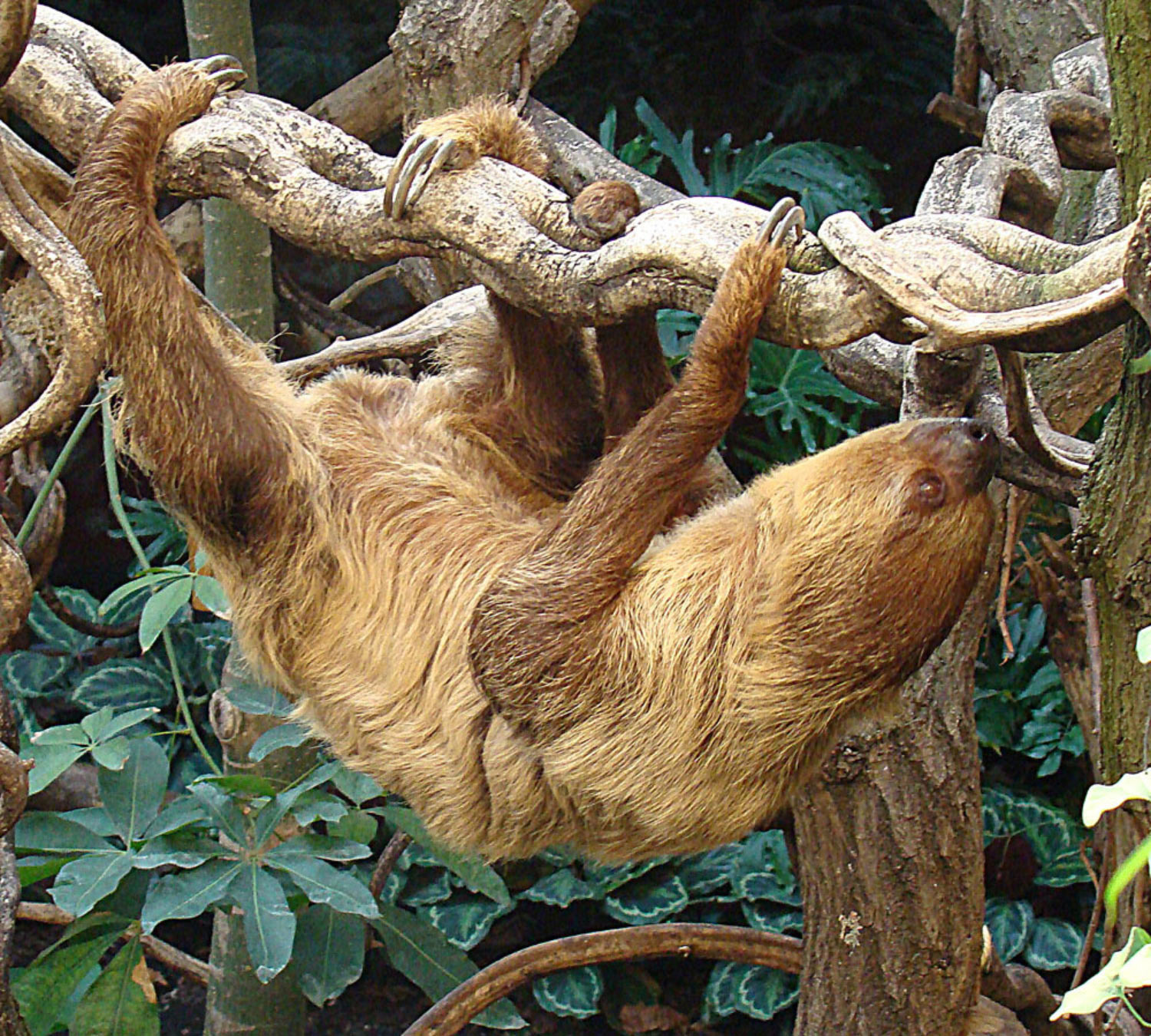
The Linnaeus’s two-toed sloth (Choloepus didactylus) at London Zoo. Image credit: Dick Culbert / CC BY 2.0.
Xenarthrans have been around for 65.5 million years, with extinct sloth ancestors including elephant-sized ground sloths.
Now, modern-day sloths are all tree-dwelling and belong to two groups: two-toed sloths and three-toed sloths.
They spend most of their time in the trees where they hang motionless and camouflaged, and when they do move between branches to feed on leaves and fruits — it all happens at a slow pace.
They have the lowest metabolism among mammals, often less than half of what is expected for their body size.
To conserve energy, they can switch between self-regulating their body temperature, and allowing it to fluctuate with the environment.
While being slow, they are strong swimmers, sometimes covering large distances in water when searching for a mate.
To gain a deeper understanding of the unusual biology of sloths, Wellcome Sanger Institute researcher Marcela Uliano-Silva and her colleagues turned to genomics.
“Evolution has already run billions of experiments,” Dr. Uliano-Silva said.
“By studying unusual animals like sloths, we sometimes uncover biological solutions that humans never evolved.”
“Using genomics to look back through time, we found ‘jumping genes’ that sloths have conserved over millions of years.”
“These sloth-specific genes are linked to mitochondria and metabolic pathways, suggesting they might be related to the evolution of their extremely slow metabolism.”
In the study, the authors sequenced and analyzed the genome of the Linnaeus’s two-toed sloth and the southern anteater.
They found that the sloth genome had several copies of active transposable elements, called ‘transposons’ or ‘jumping genes,’ which are DNA sequences that can copy and paste themselves to change their position in the genome.
By using genomics to look back through time and map the evolution of sloths, they found these ‘jumping genes’ arose in the last common ancestor of all living sloth species around 30 million years ago.
The genes have since been conserved over time, making them ingrained genetic sequences that are unique to sloths.
The researchers were surprised to find that many of these genes are connected to mitochondria — the ‘power houses’ of cells that generate their energy — and metabolic pathways.
Since sloths have one of the most unique metabolisms among mammals, they believe that these sloth-specific genes are related to their unusual adaptations to the environment and evolution of their extremely slow metabolism.
“Sloths have the slowest metabolism of any mammal, yet they remain healthy,” said Dr. Camila Mazzoni, a researcher at the Leibniz Institute for Zoo and Wildlife Research and the Berlin Center for Genomics in Biodiversity Research.
“Understanding how they achieve this may reveal new insights into how cells manage energy efficiently.”
“Our findings suggest that sloths might have evolved genetic ‘backup systems’ that help compensate for their ‘relaxed mitochondria’ and support their unique lifestyle.”
“Many human conditions — including diabetes, aging-related disorders, neurodegeneration, and muscle wasting — involve problems with energy production and mitochondrial function,” said Dr. Pedro Galante, a researcher at the Hospital Sírio Libanês.
“While further research is needed, sloth cell lines may offer a natural model for understanding how organisms cope with low-energy states, and what goes wrong in disease.”
“In the long term, this could inform research into tissue preservation, critical care medicine, aging, metabolic disease, and even long-duration space travel.”
The study was published in the journal BMC Biology.
_____
M. Uliano-Silva et al. Elevated retrocopy burden and sloth-specific expansions illuminate mammalian genome evolution. BMC Biol, published online May 19, 2026; doi: 10.1186/s12915-026-02632-5