Genetics News

Apr 3, 2018 by News Staff

The platypus (Ornithorhynchus anatinus) is an egg-laying mammal which, alongside the echidna, occupies a unique place in the mammalian family tree. The unique creature had its genome sequenced a decade ago, revealing its unique genetic makeup and its divergence from the rest of the mammals around 160 million years ago. Now, a greater effort to understand its ecological and population history has been made possible by the first, whole-scale genome...

Mar 23, 2018 by News Staff

A new genetic cause of an autosomal-dominant corneal endothelial dystrophy has been discovered in a study led by University College London scientists. Posterior...

Mar 22, 2018 by News Staff

University of Lincoln researcher Malgorzata Pilot and colleagues have found small blocks of dog ancestry in the genomes of 62% Eurasian grey wolves. Published...

Mar 22, 2018 by News Staff

An international team of scientists has sequenced the genomes of five Neanderthals who lived around 47,000 to 39,000 years ago (that is, late Neanderthals),...

Mar 22, 2018 by News Staff

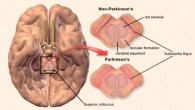
A mutation in the leucine rich repeat kinase 2 (LRRK2) gene — the most common cause of inherited Parkinson’s disease — alters cells circulating...

Mar 21, 2018 by News Staff

How empathic we are is partly a result of our genes, according to the results of the largest genome-wide association study of its kind. Empathy is the...

Mar 19, 2018 by News Staff

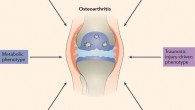
A multinational group of scientists led by the Wellcome Sanger Institute has discovered nine novel genes for osteoarthritis, a degenerative joint disease...

Mar 19, 2018 by Enrico de Lazaro

An international team of scientists has sequenced and assembled the genome of a venomous shrew-like insectivore called the Hispaniolan solenodon. The Hispaniolan...

Mar 16, 2018 by News Staff

A team of researchers from the University of Washington and Princeton University has found that the genomes of two groups of modern humans with Denisovan...

Mar 14, 2018 by News Staff

A large-scale international collaboration called MEGASTROKE has identified 22 new genetic risk factors for stroke, thus tripling the number of gene regions...

Feb 28, 2018 by News Staff

Elephants were once among the most widespread megafaunal families. However, only three species exist today: two species of the genus Loxodonta, the forest...

Feb 26, 2018 by News Staff

Scientists have produced the first high-quality genomic sequence for the Tasmanian tiger (Thylacinus cynocephalus), also known as the thylacine. Tasmanian...

Feb 26, 2018 by News Staff

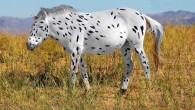
New research overturns a long-held assumption that Przewalski’s horses (Equus ferus przewalskii), a rare and endangered animal native to the steppes...

Feb 20, 2018 by News Staff

Cheddar Man — a hunter-gatherer who lived 10,000 years ago — had blue eyes, dark colored curly hair and ‘dark to black’ skin pigmentation,...

Feb 1, 2018 by News Staff

Researchers have for the first time mapped the entire genome of the Colorado potato beetle (Leptinotarsa decemlineata), one of the most challenging agricultural...

Jan 31, 2018 by Enrico de Lazaro

An international team of researchers has successfully sequenced, assembled and analyzed the genome of the Mexican axolotl (Ambystoma mexicanum), an enigmatic...

Jan 31, 2018 by News Staff

Human skeletal muscles have an epigenetic memory of earlier encounters with growth, according to a Keele University-led study. According to Seaborne et...

Jan 20, 2018 by News Staff

In a scientific first, a research team led by Gladstone Institutes scientists turned mouse skin cells into so-called induced pluripotent stem cells by...

Jan 18, 2018 by News Staff

Many of the genes involved in natural repair of the injured spinal cord of a fish called the lamprey are also active in the repair of the peripheral nervous...

Jan 4, 2018 by News Staff

Genetic analysis of DNA from a female infant found at the Upward Sun River archaeological site in Alaska has revealed a previously unknown Native American...