Homo erectus, one of the longest-lived members of the human family tree, may have persisted in the dense tropical forests of southern China until 184,000 years ago, according to two studies published today in the journal Nature.
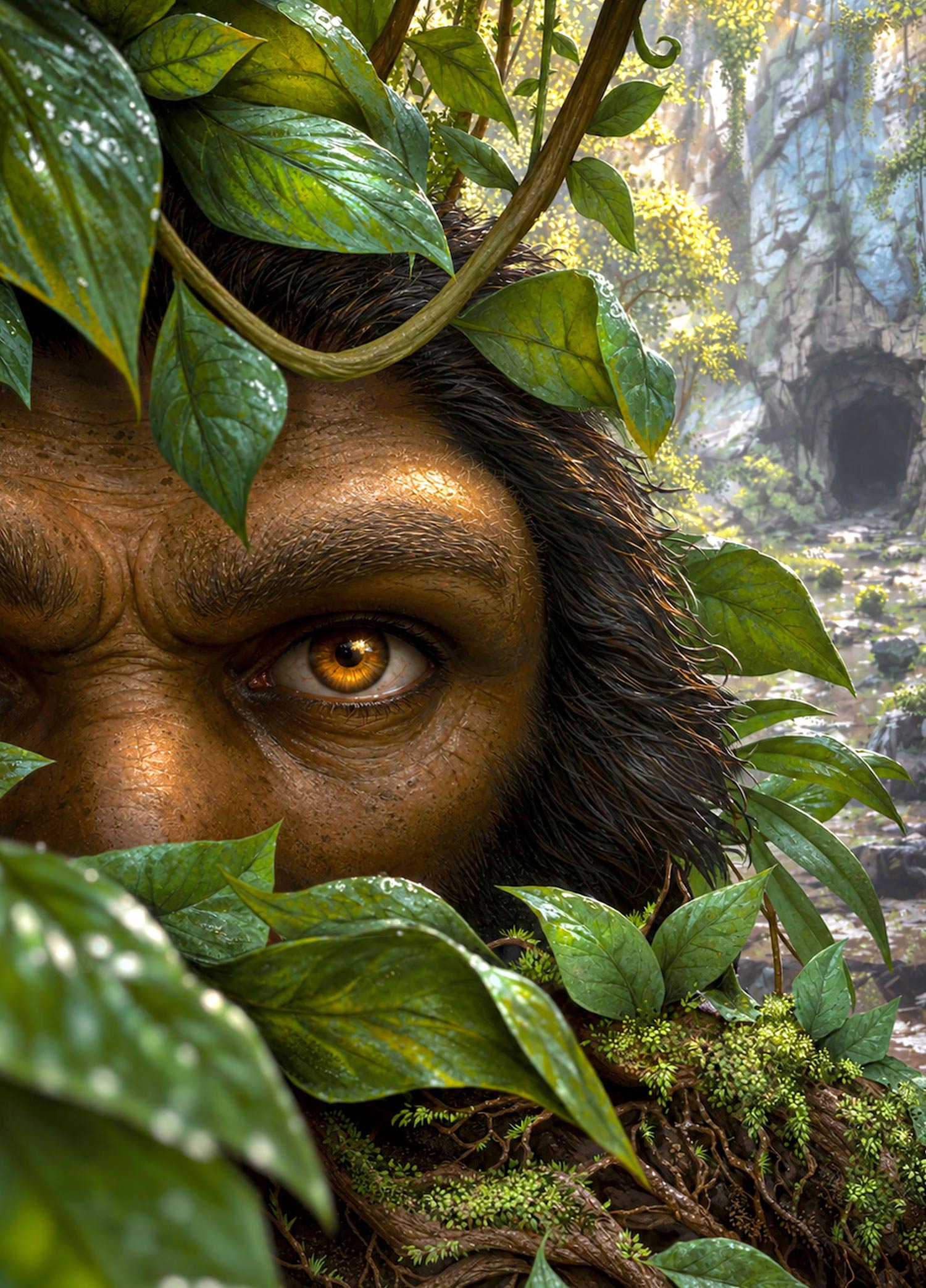
Illustration of Homo erectus lurking in the shadows of the tropical forest in Guangxi, with the entrance to Baxian Cave in the background. Image credit: Garciart / Joannes-Boyau.
Until now, there were no securely dated Homo erectus fossils from mainland Asia younger than about 400,000 years
The last known members of the species were thought to have lived on the Indonesian island of Java, with the youngest, at Ngandong, dated to 117,000 to 108,000 years ago.
“This is a fascinating discovery because it confirms the presence of Homo erectus in a location we were not expecting and at a time we hadn’t considered,” said Macquarie University’s Professor Kira Westaway of.
“This has huge implications for the timeline of Homo erectus as we attempt to understand the causes of its extinction.”
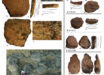
In the first study, Professor Westaway and colleagues examined nine hominin teeth recovered from two sister caves, Baxian and Naxian, in China’s Guangxi region.
They combined 43 radiometric ages from five dating techniques, including luminescence dating of sediments and uranium-series dating of teeth and mineral deposits.
Statistical modeling placed the fossils between 324,000 and 184,000 years ago at Baxian and between 319,000 and 241,000 years ago at Naxian.
This is the youngest reliably dated evidence of the species in China, and the first with firm dating from the south.
“On the Asian mainland, the species was thought to have largely disappeared around 400,000 years ago,” said Dr. Frido Welker, a researcher with the Globe Institute at the University of Copenhagen.
“So it’s very surprising to find evidence showing that they persisted much later.”
In the second study, the authors set out to establish which species the teeth belong to.
The question matters because fragmentary teeth from the region have sometimes been confused with those of orangutans.
The researchers used CT scans to examine the internal structure of the teeth.
Eight of the nine matched Homo erectus in their shape and structure, and differed from Neanderthals, Denisovans and modern humans.
Five teeth were also analyzed for ancient proteins preserved in the enamel, a technique that can yield molecular information from fossils too old to retain DNA. Proteins were recovered from all five. None showed features unique to orangutans.
Four of the five carried an amino acid change in a protein called ameloblastin that had previously been seen only in Homo erectus fossils from China dated to about 400,000 years ago. But they lacked a second change found in those older specimens.
This suggests the southern teeth come from a Homo erectus population that had not been sampled molecularly before.
A statistical analysis of the protein sequences placed them as an early branch, outside the group containing Neanderthals, Denisovans and modern humans.
The proteins also showed that four of the individuals were genetically male and one female.
One hominin tooth from Baxian Cave, labeled PA1796, did not fit.
Its shape was unlike that of Homo erectus, Neanderthals or modern humans, and its proteins lacked the Homo erectus signature.
According to the study, it may belong to a Denisovan, an enigmatic group known mostly from fossils and DNA in Siberia, Tibet, Taiwan and Laos, or possibly to another population.
“We can say with a high degree of confidence that the tooth did not belong to Homo erectus,” Dr. Welker said.
“But we cannot yet determine which human species it belonged to. That is what makes the discovery so exciting, because it shows that at least two different human groups lived side by side in the region.”
In the first study, the scientists was able to reconstruct the environment the Chinese Homo erectus lived in.
Carbon isotopes in the tooth enamel of animals from both caves indicated diets drawn entirely from plants of the shaded forest, with no sign of grassland vegetation.
Three Homo erectus teeth from Naxian Cave gave similar signals, at the boundary between dense forest and more open woodland.
This contrasts with Javan sites such as Sangiran and Trinil, where animal isotopes point to more open habitats.
Researchers had suggested that expanding rainforest may have helped drive the last Homo erectus populations to extinction, and that only Homo sapiens could exploit such environments.
The team argues that the species was not excluded from rainforest, though it may not have been its ideal habitat.
“Teeth can record the environments in which animals and humans lived,” said Dr. Nicolas Bourgon, a researcher at the Max Planck Institute of Geoanthropology.
“In this case, the animal teeth and the Homo erectus teeth are telling the same story – these individuals were part of a rainforest ecosystem.”
“These findings change how we think about Homo erectus,” added Professor Yingqi Zhang, a paleontologist with the Institute of Vertebrate Palaeontology and Palaeoanthropology at the Chinese Academy of Sciences.
“Finding Homo erectus evidence for the first time amongst a rainforest fauna challenges all our assumptions about their ability to adapt to environmental changes.”
“While there has been growing recognition that our own species, Homo sapiens, adapted to rainforests around the world between 100,000 and 13,000 years ago, this is the first clear, direct evidence we have for another hominin living within these habitats,” said Professor Patrick Roberts, a researcher at the Max Planck Institute of Geoanthropology.
Strontium isotopes in the enamel of four teeth, which reflect the local rocks where a person lived as a child, varied within individual teeth.
The study authors interpret this as evidence of movement between different geological regions, possibly as far as 250 km away toward northern Vietnam.
“Some of the chemical signatures in the fossil teeth point well beyond the immediate cave region, potentially towards northern Vietnam and mainland Southeast Asia,” said Professor Renaud Joannes-Boyau, a researcher at Southern Cross University.
“This suggests these humans were far more mobile than previously recognized, moving across surprisingly large distances through a complex rainforest landscape.”
_____
K.E. Westaway et al. Rainforest adaptation in late Homo erectus from southern China. Nature, published online November 18, 2026; doi: 10.1038/s41586-026-11155-6
W. Liao et al. Evidence for late Middle Pleistocene Homo erectus in mainland East Asia. Nature, published online November 18, 2026; doi: 10.1038/s41586-026-11271-3