Prickle-free blackberry (Rubus subgenus Rubus) canes are strongly preferred by growers due to food and worker safety concerns and damage to fruit from...
This mutation is located in the Rho GTPase Activating Protein 36 (Arhgap36) gene and appears to occur in no other mammal, according to a research team...
Scientists at the University of Florida have generated the chromosome-scale genome assembly for the primocane-fruiting, thornless tetraploid blackberry...
Neotropical crocodiles inhabit a broad geographic range with populations spanning from coastal, inland, and insular locations. In new research, scientists...
Malus is a genus with over 35 species naturally distributed across the temperate northern hemisphere, from East Asia and Europe to North America. This...
Scientists have extracted and analyzed 34 new mammoth (Mammuthus spp.) mitochondrial genomes, including two Early Pleistocene and nine Middle Pleistocene...
Colossal Biosciences, the world’s only de-extinction company, has announced the rebirth of the once extinct dire wolf (Aenocyon dirus).
Colossal Biosciences’...
Researchers at the University of California, Davis have generated a chromosome-scale reference genome for the most widely grown pistachio cultivar ‘Kerman.’
Pistachio...
Molecular signaling pathways are communication systems that transmit messages within and between cells. According to a new study by University of Geneva...
For the last two decades, the prevailing view in human evolutionary genetics has been that Homo sapiens first appeared in Africa around 200,000 to 300,000...
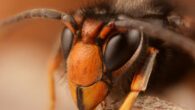
Biologists at the University of Exeter have conducted the first large-scale study of the diet of the Asian hornet (Vespa velutina), utilizing deep sequencing...
Giant pandas (Ailuropoda melanoleuca) belong to the order Carnivora, but they mainly feed on bamboo, and their unique dietary adaptability has always been...
Scientists have produced the first chromosome-scale genome assembly of the white oak (Quercus alba), an abundant forest tree species across eastern North...
Researchers from Guangdong Academy of Forestry, Northeast Forestry University and their colleagues have assembled chromosome-scale genomes for two critically...
Paleoanthropologists from the University of Vienna and Harvard University have analyzed ancient DNA from 435 individuals from Eurasian archaeological sites...
An international team of scientists has sequenced the genome of the yerba mate (Ilex paraguariensis), an economically important crop marketed for the elaboration...
Aquatic, tailed amphibians called newts have large genomes harboring many repeat elements. How these elements shape the genome and relate to newts’ unique...