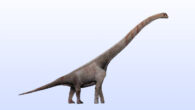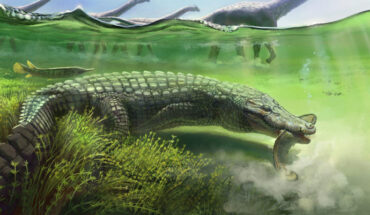
In the Monte Alto region in the Brazilian state of São Paulo, paleontologists have unearthed the fossilized remains of a new crocodyliform species that lived at the same time as giant titanosaurs and carnivorous abelisaurid dinosaurs. Life reconstruction of Titanochampsa iorii. Image credit: Julia d’Oliveira. The newly-identified crocodyliform species lived in what is now Brazil during the Late Cretaceous epoch, between 72 and 66 million years...