Scientists from Curtin University and the University of York have pinpointed the origin of the Devil’s Arrows, the three towering gritstone megaliths that have stood on the edge of Boroughbridge, Yorkshire, for roughly 4,000 years, ending a long-running archaeological debate.
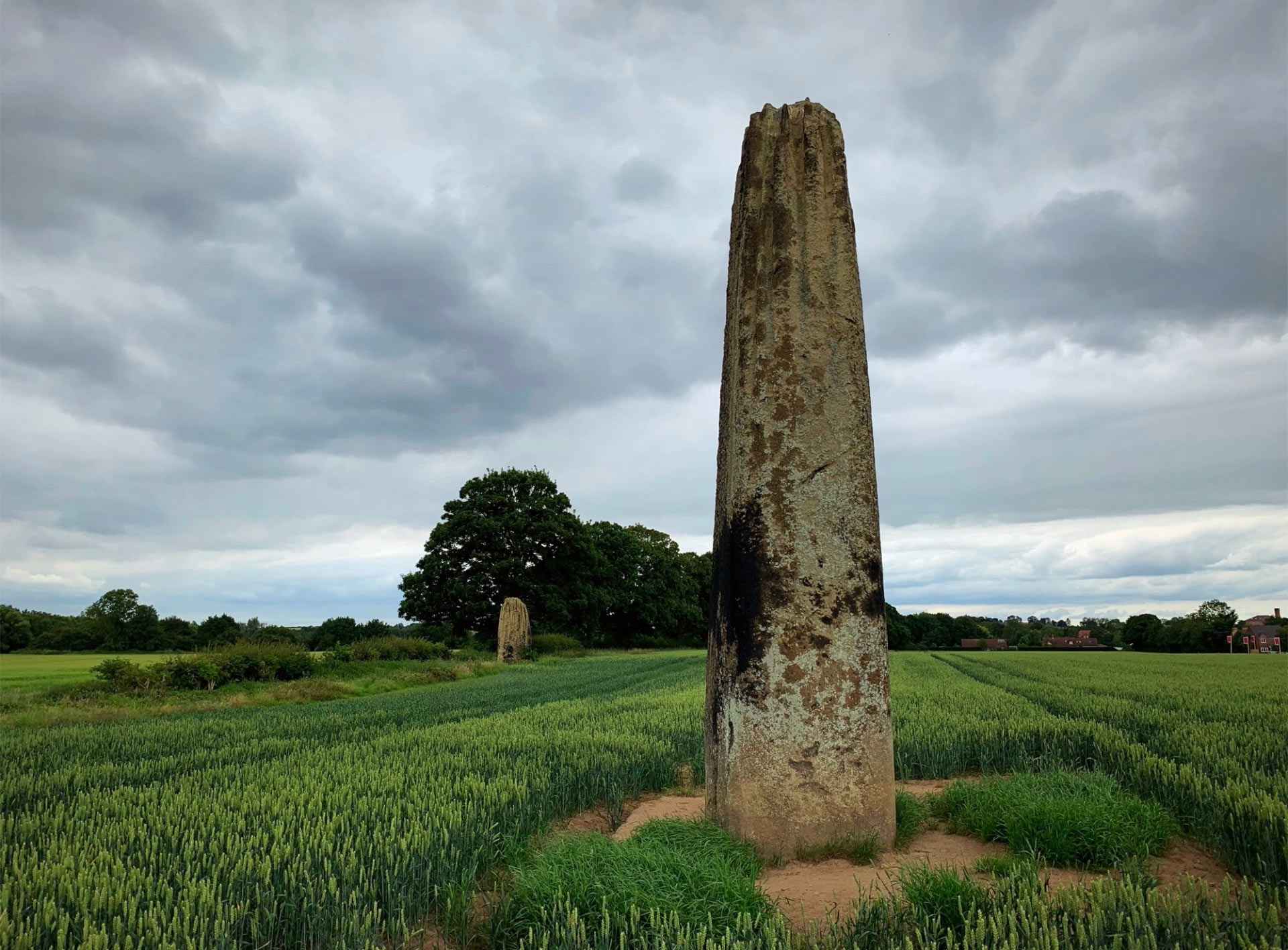
The Devil’s Arrows, the three towering gritstone megaliths on the western outskirts of Boroughbridge, Yorkshire, the United Kingdom. Image credit: Curtin University.
“The Devil’s Arrows are an alignment of three unevenly spaced standing stones on the western outskirts of Boroughbridge, North Yorkshire,” said Curtin University researcher Anthony Clarke and his colleagues.
“They are arranged in a broadly north-northwest to south-southeast orientation, stretching across 174 m, although they do not form a perfectly straight line.”
“The Arrows are the tallest surviving standing stone row in Britain, with the southern stone the second-tallest megalith after the Rudston Monolith and the central stone the third.”
“The monument is rare and one of the few examples of a stone alignment within a lowland setting.”
“Archaeologists believe they were erected during the Late Neolithic to Early Bronze Age (possibly around 2000 BCE), though the lack of recent excavation means their precise date remains unknown.”
Using a minimally invasive technique, the authors analyzed zircon and apatite crystals embedded in the megaliths.
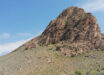
By comparing the chemical fingerprints of these grains, which record ages spanning from the Paleozoic to the Archean eon, they matched the stones to Brimham Rocks, a dramatic outcrop of wind-sculpted Millstone Grit tors about 18 km (11 miles) west of the site.
The findings favor Brimham Rocks over Plumpton Rocks, a nearer outcrop long assumed to be the source, including in England’s official heritage listing.
The scientists also ruled out the theory that the stones were glacial erratics, noting that regional ice-flow patterns moved south rather than east from the Pennine uplands.
They additionally suggest that at least one missing megalith from the original alignment — which historical accounts say once included a fourth stone — was broken up and repurposed.
The researchers argue the findings fit a broader pattern seen at Stonehenge and other Neolithic monuments: builders often bypassed closer stone sources in favor of specific, symbolically significant landscapes, suggesting the choice of quarry was as important as the monument itself.
“Our research shows these stones weren’t simply taken from the nearest available source – they were deliberately chosen from a challenging landscape 18 km away,” Dr. Clarke said.
“Plumpton Rocks, which is closer to the Devil’s Arrows, had previously been identified as the probable source of the stones.”
“Our findings instead point to Brimham Rocks, showing that prehistoric builders transported these enormous stones significantly further than thought.”
“Each stone weighs more than 25 tons, so moving them would have required incredible planning, coordination and engineering skill.
“This tells us prehistoric people placed real importance on the landscape itself. It wasn’t just about convenience — the location the stones came from likely held meaning for them.”
The team’s results were published today in the Proceedings of the Royal Society A.
_____
Anthony Clarke et al. 2026. Deliberate prehistoric sourcing of the Devil’s Arrows, Britain’s tallest stone row. Proc. R. Soc. A 482 (2345): 20260504; doi: 10.1098/rspa.2026.0504