Paleontology News

Dec 4, 2019 by Enrico de Lazaro

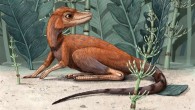
Paleontologists in Lebanon have discovered the extremely well-preserved fossilized remains of a previously unknown Cretaceous-period flying reptile. Life reconstruction of Mimodactylus libanensis. Image credit: Julius T. Csotonyi. Pterosaurs were highly successful flying reptiles — not dinosaurs, as they’re commonly mislabeled — that lived at the same time as nonavian dinosaurs, between 210 million and 65 million years ago. Some pterosaurs...

Dec 3, 2019 by News Staff

Six new species of dragonflies that lived about 50 million years ago (early Eocene epoch) have been identified from fossils found in the Okanagan Highlands,...

Dec 2, 2019 by News Staff

Ancient Australia’s super-sized animals, the megafauna, became extinct about 42,000 years ago, but the role of humans in their demise has been debated...

Nov 29, 2019 by Enrico de Lazaro

Paleontologists in China have unearthed a nearly complete skeleton of a previously unknown Cretaceous mammal species with well-preserved middle ear bones. A...

Nov 29, 2019 by News Staff

Majungasaurus, a carnivorous dinosaur that lived approximately 70 million years ago (Cretaceous period) in what is now Madagascar, grew new teeth roughly...

Nov 28, 2019 by News Staff

Complex animals evolved from single-celled ancestors, before diversifying into 30-40 distinct anatomical designs. When and how this major evolutionary...

Nov 26, 2019 by News Staff

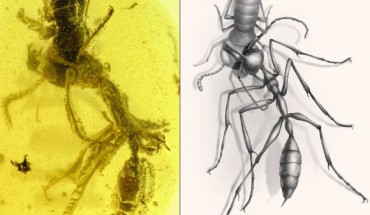
An international team of paleontologists has announced the discovery of an ancient interaction preserved in a 16-million-year-old (Miocene period) piece...

Nov 21, 2019 by News Staff

An analysis of the first three-dimensionally preserved skulls and skeletons of the extinct legged snake Najash rionegrina shows that nearly 100 million...

Nov 18, 2019 by Natali Anderson

Paleontologists in New Zealand have uncovered a nearly complete skeleton of a giant-sized penguin that swam the oceans about 27 million years ago (Oligocene...

Nov 15, 2019 by Enrico de Lazaro

A new genus and species of non-ornithothoracine bird has been identified from bones collected in Japan. Life restoration of Fukuipteryx prima, a primitive...

Nov 14, 2019 by News Staff

Orangutans (genus Pongo) are the closest living relatives of Gigantopithecus blacki, the biggest primate that ever walked the Earth, according to new research...

Nov 14, 2019 by Enrico de Lazaro

Paleontologists in Canada have found the fossil fragments from a new species of leptoceratopsid dinosaur that walked the Earth during the Cretaceous period. An...

Nov 13, 2019 by News Staff

Paleontologists have discovered the fossilized feathers of dinosaurs and birds that lived 118 million years ago (Early Cretaceous epoch) in polar environment...

Nov 13, 2019 by News Staff

‘Ghost’ fossilized footprints of human, mammoths, giant sloths and other Pleistocene creatures discovered at the White Sands National Monument in New...

Nov 12, 2019 by News Staff

Since Charles Darwin, insect pollination was thought to be a key contributor to the Cretaceous rise of flowering plants (angiosperms). Both insects and...

Nov 11, 2019 by News Staff

Paleontologists in Switzerland have unearthed an exceptionally rare fossil jaw of an ancient creature known as a pliosaur. Life reconstruction of the Arisdorf...

Nov 7, 2019 by News Staff

A previously unknown species of great ape that was well adapted to both walking upright as well as using all four limbs while climbing has been identified...

Nov 5, 2019 by News Staff

A previously unrecognized mode of fossilization of ancient microbes may explain how some of Earth’s oldest microfossils formed, according to new research. Rasmussen...

Nov 1, 2019 by News Staff

The fossil tooth fragments from extinct rhinoceroses that lived 8-9 million years ago have been found in Canada’s Yukon Territory. An artist’s imagining...

Oct 31, 2019 by News Staff

Footprints of duck-billed dinosaurs, armored dinosaurs and a tyrannosaur discovered in Aniakchak National Monument, southwestern Alaska, shed new light...