Anthropology News

Jan 24, 2025 by News Staff

Paleoanthropologists have found 1.95-million-year-old cut-marked bones that appear to have been made by early hominins using stone tools at the site of Grăunceanu in Romania. The discovery sheds new light on the timing and extent of hominin dispersal across Eurasia. This is an artist’s reconstruction of female Homo from Dmanisi, Georgia. Image credit: Elisabeth Daynes, via tabula.ge. “Current evidence for the earliest appearance of hominins...

Jan 20, 2025 by News Staff

Australopithecus had a variable but plant-based diet, according to an analysis of stable isotope data from seven hominin specimens dating back 3.5 million...

Jan 16, 2025 by News Staff

Homo erectus, an early member of the genus Homo, successfully navigated harsher and more arid terrains for longer in Eastern Africa than previously thought,...

Jan 15, 2025 by News Staff

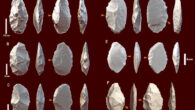
Paleoanthropologists have characterized the properties of raw stone materials that were selected and used by Early Pleistocene tool-makers at an Acheulian...

Dec 17, 2024 by News Staff

One of these genetic variants was inherited from Neanderthals, according to a study led by University College London researchers. El Sidron Neanderthals...

Dec 13, 2024 by News Staff

In a genomic study encompassing more than 300 genomes, researchers determined the time period during which Neanderthals interbred with modern humans, starting...

Dec 12, 2024 by News Staff

Scientists have sequenced and analyzed the genomes of seven individuals who lived between 42,000 and 49,000 years ago in Ranis, Germany and Zlatý kůň,...

Dec 6, 2024 by Enrico de Lazaro

Homo juluensis — a newly-erected human species that includes enigmatic Denisovans and several hominin fossils from Tibet, Taiwan and Laos —...

Dec 4, 2024 by News Staff

Paleoanthropologists have found that the Columbian mammoth (Mammuthus columbi) was the largest contributor to the diet of the Clovis people — the...

Dec 2, 2024 by Sergio Prostak

Over its history, archaeology has seen a varied set of uses made of philosophy and philosophical concepts. A persistent critique has been that too often...

Nov 29, 2024 by News Staff

New research by scientists from the University of Reading and the University of Durham shows that encephalization (i.e., relative brain size increase)...

Nov 28, 2024 by News Staff

Paleoanthropologists have discovered 1.5-million-year-old footprints of two completely different species of hominins — Homo erectus and Paranthropus...

Nov 15, 2024 by Enrico de Lazaro

Archaeologists have examined an exceptional assemblage of over a hundred perforated pebbles from the 12,000-year-old Natufian village of Nahal Ein-Gev...

Nov 11, 2024 by Sergio Prostak

Scientists from the Leibniz Zentrum für Archäologie and Durham University have examined a collection of 406 engraved schist plaquettes found at the Magdalenian...

Nov 8, 2024 by News Staff

The identification of a new hominin group called Denisovans was one of the most exciting discoveries in human evolution in the last decade. Unlike Neanderthal...

Nov 6, 2024 by News Staff

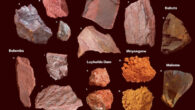
Archaeologists say they have discovered the oldest known evidence for intensive ochre mining worldwide, at least 48,000 years ago, in Lion Cavern at Ngwenya...

Nov 5, 2024 by News Staff

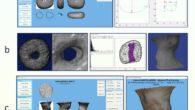
Administrative innovations in south-west Asia during the 4th millennium BCE, including the cylinder seals that were rolled on the earliest clay tablets,...

Oct 30, 2024 by News Staff

Northwestern Arabia — the region between Mecca and Aqaba — during the Bronze Age was dotted with interconnected monumental walled oases centered...

Oct 24, 2024 by News Staff

In 2000, archaeologists discovered the 300,000 to 400,000-year-old remains of three ancient elephants along with 87 stone tools at the Pampore in the Kashmir...

Oct 21, 2024 by News Staff

Two ecospecies of Helicobacter pylori — named ‘Hardy’ and ‘Ubiquitous’ — co-existed in the stomachs of modern humans since before they...