Üçağızlı II Cave on Türkiye’s Mediterranean coast has yielded a rare and detailed record of two Homo species living the same way of life, one after the other, over more than 20,000 years, offering new evidence that the transition from Neanderthals to modern humans in the region was far more culturally seamless than previously understood.

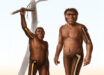
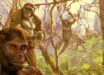
A group of Neanderthals in a cave. Image credit: Tyler B. Tretsven.
“During the Middle to Late Pleistocene, the Levant served as a corridor for the dispersal of our own species, Homo sapiens, between Africa and Eurasia,” said Kyoto University archaeologist Naoki Morimoto and colleagues.
“Early settlements in the Levant and sporadic expansions to Eurasia are indicated by the human fossils from Misliya Cave (180,000 years ago), Qafzeh and Skhul Caves (100,000 years ago), and Apidima Cave (200,000 years ago), respectively.”
“While various models have been proposed for out-of-Africa events of Homo sapiens, a leading hypothesis posits that, following repeated dispersals between 130,000 and 80,000 years ago, a major out-of-Africa migration occurred around 60,000 years ago, eventually forming the genetic foundation of present-day human populations.”
“Various questions remain open due to such a paucity of fossil data around the time of the substantial out-of-Africa migration of Homo sapiens.”
“A major question revolves around the tempo, mode, and behavioral context of the interaction between Homo sapiens and Homo neanderthalensis.”
“The Levant is one of the few regions where modern humans and Neanderthals occupied overlapping territories.”
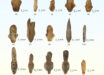
In Üçağızlı II Cave, located in the northernmost stretch of the Levant near the Orontes River, the archaeologists uncovered a stratified sequence of teeth, stone tools, animal remains and seashells spanning roughly 77,000 to 47,000 years ago.
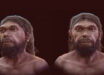
Dental analysis showed that the oldest layers, dated to between about 77,000 and 59,000 years ago, contained teeth belonging to Neanderthals, while the uppermost layer, dated to between 59,000 and 47,000 years ago, held teeth attributed to early Homo sapiens.
What struck the archaeologists was not the change in species but the lack of change in behavior.
Both the Neanderthal and modern human occupants produced strikingly similar stone tools rooted in Middle Paleolithic, or Mousterian, traditions, relied on the same hunting strategies targeting wild goats, fallow deer, roe deer and wild boar, and collected the same small marine snail shells, Columbella rustica, apparently for use as ornaments rather than food.
Some of those shells showed signs of deliberate perforation and even heat exposure that altered their color, suggesting both species treated them as objects of symbolic or decorative value rather than as a food source.
An incised stone artifact and other manuports — objects transported to the site without any practical use — appeared throughout the sequence as well, pointing to a shared tradition that persisted across the species boundary.
“Our findings indicate a deep level of cultural interaction,” Dr. Morimoto said.
“These two distinct but closely related human groups were not just adapting to the same environment: they were probably sharing symbolic preferences.”
According to the researchers, their results diverge from patterns seen at other sites, such as Mandrin Cave in France, where modern human and Neanderthal occupations alternated in distinct, sharply differentiated layers.
At Üçağızlı II Cave, by contrast, cultural continuity appears to have outlasted the biological turnover, suggesting the two species were in close and perhaps sustained contact in the region.
“The discoveries at Üçağızlı II Cave fill a long-standing gap in the global archaeological and paleontological record, potentially rewriting our understanding of how early human species interacted, communicated, and shared their worlds with each other,” the scientists concluded.
The findings appear this week in the Proceedings of the National Academy of Sciences.
_____
İsmail Baykara et al. 2026. Long-term cultural continuity across the Neanderthal-modern human sequence at Üçağızlı II Cave, northern Levant. PNAS 123 (29): e2609061123; doi: 10.1073/pnas.2609061123