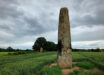
Scientists have uncovered compelling new evidence that early human ancestors, likely Homo erectus, were deliberately bringing fire into Wonderwerk Cave in South Africa as far back as 1.79 million years ago.

Wonderwerk Cave, South Africa. Image credit: Michael Chazan.
Wonderwerk Cave is located 60 km south of the town of Kuruman in South Africa’s Northern Cape province.
The site has yielded a fossil and archaeological record covering almost two million years of human occupation.
“The use of fire is a critical component of the evolutionary dynamics of the genus Homo that led to a momentous shift in the relations between hominins and their natural and cultural environments,” said Dr. Liora Kolska Horwitz from the Hebrew University of Jerusalem and colleagues.
“The tempo and scale of innovation in hominin pyrotechnology are the subject of debate, yet it seems likely that early Homo was only able to acquire fire from natural, mostly seasonal wildfire resources, bring it to their occupation sites, and maintain it until it was extinguished.”
“The ability to make and control fire only developed much later.”
“The most robust dataset supporting early fire use currently derives from the Acheulean of Wonderwerk Cave, South Africa.”
Previous research had established fire use inside Wonderwerk Cave at roughly one million years ago.
Dr. Kolska Horwitz and co-authors reached deeper into the cave’s stratigraphic record and found burnt animal bones dating to a period between 1.07 and 1.79 million years ago.
The hominins responsible were most likely Homo erectus, and they appear to have been neither passive observers of natural wildfires nor sophisticated fire-makers.
Instead, the evidence points to something in between: early humans who captured fire from wildfires burning outside the cave and carried it inside, maintaining it until it burned out.
“Evidence of fire from such ancient sites is often subtle and difficult to detect,” Dr. Kolska Horwitz said.
“Our study provides new tools for identifying traces of ancient burning and reveals that fire was repeatedly present deep inside Wonderwerk Cave.”
Central to the study is a new analytical technique the researchers developed to detect burning on fossil bone.
“When illuminated with specific wavelengths of light, bones that have been exposed to intense heat emit a distinctive glow,” they explained.
“By combining this non-destructive luminescence technique with established chemical analyses, they were able to identify burned animal bones with a high degree of confidence.”
Combined with the clear stratigraphic association of burnt remains with Acheulean stone tools and the absence of any evidence of sediment transport that might explain away the bones’ presence, they argue the case for intentional human fire use is strong.
“These discoveries show that early humans were not simply passive observers of natural fires,” Dr. Kolska Horwitz said.
“They were actively engaging with fire and incorporating it into their lives.”
The study was published online June 1, 2026 in the journal PLoS ONE.
_____
M.D. Marin-Monfort et al. 2026. New evidence for Early Pleistocene use of fire at Wonderwerk Cave (South Africa). PLoS One 21 (6): e0347480; doi: 10.1371/journal.pone.0347480