Biology News

May 18, 2026 by Natali Anderson

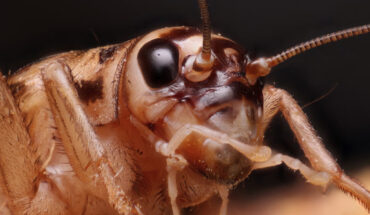
When an antenna of the house cricket (Acheta domesticus) is touched with a heated probe, something curious happens: the insect turns its attention to the burned spot, grooming it repeatedly, for far longer than it would after a harmless touch or no contact at all. According to team of entomologists at University of Sydney, that behavior may be evidence of something scientists have long debated — that insects experience pain-like states. Manzi...

May 18, 2026 by News Staff

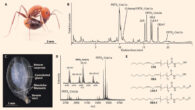
Entomologists have discovered that carpenter ants — the largest genus within the stingless ant subfamily Formicinae — produce dozens of previously...

May 14, 2026 by News Staff

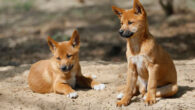
A large genetic survey reveals that the country’s so-called ‘wild dogs’ remain predominantly dingo, reshaping debates over conservation and wildlife...

May 13, 2026 by News Staff

A study of radiation fog events over Pennsylvania has found that bacteria living inside fog droplets are actively growing and feeding on toxic chemicals...

May 12, 2026 by Natali Anderson

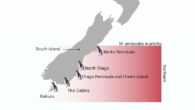
For decades, scientists treated the yellow-eyed penguin (Megadyptes antipodes) as a single species split into two broad populations. A new genomic study...

May 11, 2026 by News Staff

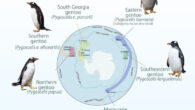
Genetic evidence suggests the familiar seabird is actually four separate species — including one previously unknown to science — with three...

May 7, 2026 by News Staff

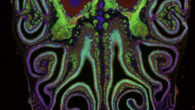
By mapping millions of smell-sensing neurons in mice, scientists discovered precise striped patterns inside the nose, overturning decades-old assumptions...

May 7, 2026 by News Staff

Using environmental DNA (eDNA) collected from waters more than 4 km deep off Western Australia’s Nyinggulu (Ningaloo) coast, researchers identified a...

May 5, 2026 by Natali Anderson

New research reveals that 3.4 billion years ago (Archean Eon), ancient microbes relied on molybdenum — a metal that was vanishingly rare at the time...

May 4, 2026 by News Staff

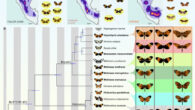
A landmark study of several butterfly lineages and a day-flying moth in South America shows that convergent evolution — when unrelated species arrive...

May 1, 2026 by News Staff

Experiments involving dozens of European bird species — such as great tits, house sparrows and blackbirds — suggest the birds can distinguish...

Apr 29, 2026 by Natali Anderson

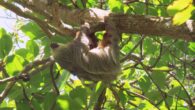
A comprehensive genome-wide analysis of Amazonian two-toed sloths (genus Choloepus) suggests the animals are more genetically diverse than once believed,...

Apr 27, 2026 by News Staff

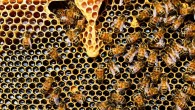
A new analysis of honeybee vision suggests their ability to distinguish quantities is not a trick of visual patterns, but evidence of genuine numerical...

Apr 24, 2026 by Natali Anderson

In the lightless depths of the Gulf of Alaska, approximately 3,251 m (two miles) below the surface, a softball-sized golden object clinging to a rock left...

Apr 23, 2026 by News Staff

New experiments with rice suggest that the acoustic vibrations of falling droplets can jolt dormant seeds into growth, offering the first direct evidence...

Apr 20, 2026 by News Staff

By studying almost 900 parrots living with humans, a team of researchers from the University of Northern Colorado, the University of Vienna, the Acoustics...

Apr 13, 2026 by News Staff

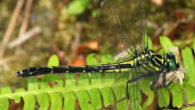
A newly-identified visual protein lets dragonflies detect deep red and near-infrared light using a mechanism strikingly similar to that in human eyes,...

Apr 13, 2026 by News Staff

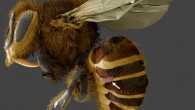
Honeybees (Apis mellifera) are important ecological and agricultural pollinators. In the United States, beekeepers experience substantial annual colony...

Apr 8, 2026 by News Staff

A protist species called Stentor coeruleus appears to navigate by sensing physical shapes — a discovery that suggests even the simplest life forms...

Mar 31, 2026 by News Staff

Researchers who analyzed dozens of spontaneous performances by a captive male chimpanzee named Ayumu say the animal’s steady rhythms and expressive ‘play...