Genetics News

May 25, 2016 by Enrico de Lazaro

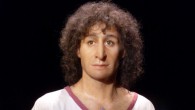
An international team of scientists from Lebanon, Tunisia, France and New Zealand has sequenced the complete mitochondrial genome of the ‘Young Man of Byrsa, or ‘Ariche,’ a Phoenician who lived in Carthage in the 6th century BC. Ariche, the Carthaginian man. Image credit: M. Rais. “The Phoenicians are recognized as one of the great early civilizations of the Mediterranean,” said study co-leader Prof. Lisa Matisoo-Smith from the University...

May 19, 2016 by Enrico de Lazaro

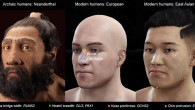
A multinational team of researchers led by University College London (UCL) has found four genes that impact nose shape. Image showing variation between...

May 18, 2016 by Natali Anderson

An international team of researchers has sequenced the genomes of the giraffe and its closest living relative, the okapi, and — through comparative...

May 11, 2016 by Enrico de Lazaro

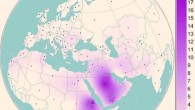
An international team of genetic researchers from the United States and Europe has found new evidence that there was an Ice Age refugium in southern Arabia. Spatial...

May 6, 2016 by News Staff

In a paper published in the journal Genetics, scientists from the University of North Dakota and the University of Minnesota present multiple lines of...

May 3, 2016 by News Staff

Analyses of genome-wide data from 51 Eurasians from 7,000 – 45,000 years ago reveal two big changes in prehistoric human populations that are closely...

May 3, 2016 by News Staff

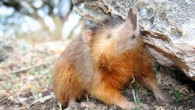
An international team of scientists has completely sequenced the mitochondrial genome of the Hispaniolan solenodon (a venomous, insectivorous mammal that...

Apr 26, 2016 by News Staff

An international team of scientists from New Zealand, Australia and the UK — including Prof. Colin Willoughby from the University of Liverpool —...

Apr 25, 2016 by Enrico de Lazaro

In a large-scale international study, researchers have identified three genetic variants associated with subjective well-being (happiness), two variants...

Apr 22, 2016 by News Staff

An international team of researchers from Uppsala University and Princeton University has identified a specific gene that within a year helped spur a permanent...

Apr 20, 2016 by Sergio Prostak

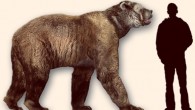
A study led by Dr. Kieren Mitchell of the University of Adelaide sheds new light on the evolution of what are believed to be the largest bears that ever...

Apr 19, 2016 by News Staff

A new tool called the Geographic Population Structure (GPS), which converts DNA data into its ancestral coordinates, has pinpointed origin of Yiddish speakers,...

Apr 8, 2016 by Natali Anderson

Neanderthal Y-chromosome genes disappeared from the genome of modern humans long ago, suggests a new study published this week in the American Journal...

Apr 1, 2016 by News Staff

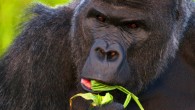
The genome of the Western lowland gorilla (Gorilla gorilla ssp. gorilla) has been sequenced at a high level of quality beginning to approach that of the...

Mar 29, 2016 by Enrico de Lazaro

Dr. David Reich from Harvard Medical School and his colleagues have produced a world map of Denisovan and Neanderthal ancestry in 120 diverse populations....

Mar 23, 2016 by Enrico de Lazaro

Nineteen previously unidentified pieces of non-human DNA — left by retroviruses that first infected human ancestors hundreds of thousands of years...

Mar 18, 2016 by News Staff

Residents of the Pacific islands of Melanesia share fragments of genetic code with two early human species: Denisovans, whose remains were found in Siberia,...

Mar 15, 2016 by Enrico de Lazaro

The first analysis of nuclear DNA from Sima de los Huesos hominins, conducted by Dr. Matthias Meyer of the Max Planck Institute for Evolutionary Anthropology...

Mar 1, 2016 by News Staff

The first gene identified for graying hair has been discovered by an international team of researchers. At the top are shown drawings illustrating the...

Feb 23, 2016 by Natali Anderson

An international group of scientists has successfully sequenced the whole mitochondrial genome of the ancient glyptodont – a heavily armored herbivorous...