Biology News

Apr 9, 2014 by News Staff

Male Eurasian jays, Garrulus glandarius, are able to disengage from their own current desires to feed female food that she wants, says a group of scientists led by Prof Nicola Clayton from the University of Cambridge, UK. Eurasian jay, Garrulus glandarius, in Tarn, France. Image credit: Pierre Dalous / CC BY-SA 3.0. The ability to disengage from our own desire to cater to someone else’s wishes is thought to be a unique feature of human cognition. In...

Apr 9, 2014 by News Staff

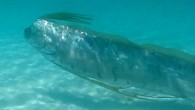
An extremely rare oarfish has been captured on camera in the shallow waters of the Gulf of California. Shedd Aquarium kayakers filmed this 4-m-long Giant...

Apr 8, 2014 by News Staff

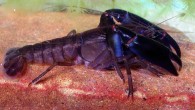
Dr Robert McCormack from the Australian Aquatic Biological Pty’s Australian Crayfish Project has described a new species of crayfish from the swamps...

Apr 7, 2014 by News Staff

According to a new study published in the Journal of Zoology, the dingo is a distinct member of the dog family, not a kind of wild dog as previously believed. A...

Apr 5, 2014 by News Staff

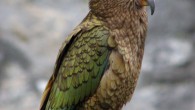
A new study published in the journal Molecular Ecology reveals the glacial and post-glacial history of the kea, Nestor notabilis. A juvenile Kea, Nestor...

Apr 4, 2014 by News Staff

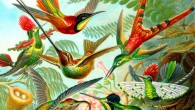
In a 12-year-long study of 284 of the world’s 338 known hummingbird species, an international team of ornithologists has mapped the 22-million-year-old...

Apr 2, 2014 by News Staff

Dr Shannon Still, a biologist with Chicago Botanic Garden, has described two new species of desert poppies from the deserts of California and Arizona. Eschscholzia...

Apr 2, 2014 by News Staff

According to a team of researchers led by Prof Tim Caro from the University of California at Davis, zebra’s stripes stave off biting flies, including...

Mar 28, 2014 by News Staff

Researchers led by Dr Jef Boeke of NYU Langone Medical Center’s Institute for Systems Genetics have synthesized the first functional chromosome in...

Mar 18, 2014 by News Staff

British researchers have brought back to life 1,530-year-old moss recovered from Antarctic permafrost. Extensive regrowth of the 1,530-year-old moss Chorisodontium...

Mar 11, 2014 by News Staff

According to a study of wild African elephants (Loxodonta africana) in Kenya published in the open-access journal PLoS ONE, elephants produce alarm calls...

Mar 4, 2014 by News Staff

A team of scientists from France has discovered a new genus of giant virus in 30,000-year-old ice in the north-eastern Siberia, Russia, and managed to...

Feb 25, 2014 by News Staff

Dogs have dedicated voice area in their brains, just as people do, say scientists from Hungary led by Dr Attila Andics of MTA-ELTE’s Comparative Ethology...

Feb 21, 2014 by News Staff

A group of scientists from Switzerland say that the floodplain-dwelling ants (Formica selysi), when facing a flood, build rafts and use both the buoyancy...

Feb 19, 2014 by News Staff

Biologists have discovered a new type of Propionibacterium acnes – the bacterium that causes human acne by infecting skin pores and forming spots...

Feb 19, 2014 by News Staff

A study led by Dr Joshua Plotnik from Mahidol University and the Think Elephants International has found that Asian elephants (Elephas maximus) console...

Feb 17, 2014 by News Staff

Scientists from a U.S.-based organization called the Center for Biological Diversity filed a petition seeking Endangered Species Act protection for nine...

Feb 14, 2014 by News Staff

Marine scientists from UK have successfully demonstrated a novel method of identifying and counting whales using very high resolution satellite imagery,...

Feb 13, 2014 by News Staff

Chinese and Thai biologists say they have discovered a new stone oak species in Thailand. Lithocarpus orbicarpus, a branch with leaves. Image credit: S....

Feb 12, 2014 by News Staff

According to a team of biologists led by Dr Vladimir Dinets from the University of Tennessee, certain species of crocodiles are able to climb trees as...