Featured News

Mar 4, 2016 by News Staff

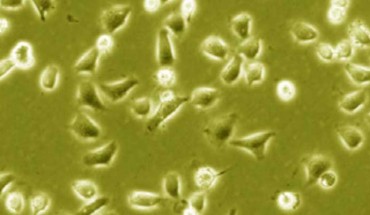
A team of researchers led by Michigan State University biochemist and molecular biologist Amy Ralston has discovered a new kind of stem cell — induced extraembryonic endoderm stem (iXEN) cells. Morphology of iXEN cells is similar to that of blastocyst-derived XEN cells. Image credit: Anthony Parenti et al. “Other scientists may have seen these cells before, but they were considered to be defective, or cancer-like. Rather than ignore these...

Mar 3, 2016 by Sergio Prostak

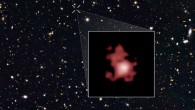
Using the NASA/ESA Hubble Space Telescope, astronomers have found a surprisingly bright, infant galaxy 13.4 billion light-years from us, making it the...

Mar 2, 2016 by Enrico de Lazaro

For the first time, astronomers have detected repeating short bursts of radio waves — so-called fast radio bursts — coming from an extremely...

Feb 29, 2016 by Enrico de Lazaro

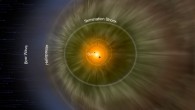
Using data from NASA’s Interstellar Boundary Explorer (IBEX), researchers have accurately determined the strength and direction of the magnetic field...

Feb 26, 2016 by Sergio Prostak

Physicists on the DZero international collaboration at Fermilab, the U.S. Department of Energy’s laboratory specializing in high-energy particle physics,...

Feb 26, 2016 by News Staff

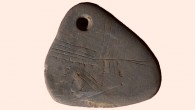
An 11,000-year-old engraved shale pendant has been found during excavations at the Early Mesolithic site of Star Carr, UK. 11,000-year-old engraved shale...

Feb 25, 2016 by Enrico de Lazaro

An international team of astronomers reported today that they had tracked down the location of a so-called fast radio burst (FRB), a mysterious and rarely...

Feb 23, 2016 by Natali Anderson

An international group of scientists has successfully sequenced the whole mitochondrial genome of the ancient glyptodont – a heavily armored herbivorous...

Feb 23, 2016 by Enrico de Lazaro

An international team of scientists from Czech Republic, France and Germany has identified a cryptic new species of grass snake living in the North African...

Feb 19, 2016 by Natali Anderson

Using the NASA/ESA Hubble Space Telescope, scientists have discovered that a giant extrasolar planet called 2MASSWJ 1207334-393254b has patchy clouds and...

Feb 17, 2016 by News Staff

A multinational group of researchers has found strong genetic evidence of an interbreeding event between Neanderthals and anatomically modern Homo sapiens...

Feb 17, 2016 by Enrico de Lazaro

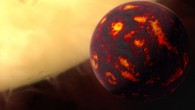
Using the NASA/ESA Hubble Space Telescope, European astronomers have been able to examine the atmosphere of the extrasolar planet 55 Cancri e in unprecedented...

Feb 15, 2016 by News Staff

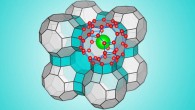
An international team of scientists, led by Xiao Cheng Zeng from the University of Nebraska-Lincoln and Jijun Zhao from the Dalian University of Technology,...

Feb 11, 2016 by News Staff

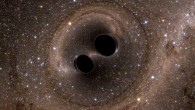
For the first time, physicists have observed ‘ripples’ in the fabric of space-time called gravitational waves. The collision of two black holes is...

Feb 9, 2016 by Natali Anderson

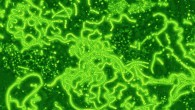
According to a study published in the journal eLife, cyanobacteria cells act as spherical microlenses, allowing the cell to see a light source and move...

Feb 9, 2016 by Enrico de Lazaro

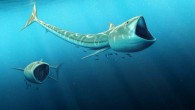
A group of paleontologists from the United States, the UK and China has discovered two new suspension-feeding species of the bony fish genus Rhinconichthys. Artist’s...

Feb 5, 2016 by News Staff

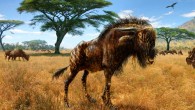
Rusingoryx atopocranion — a little-known wildebeest-like bovid that lived in equatorial East Africa 100,000 – 50,000 years ago (late Pleistocene)...

Feb 4, 2016 by Natali Anderson

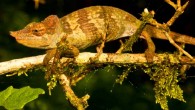
A team of scientists led by Dr. Michele Menegon of the Museo delle Scienze in Trento, Italy, has described a previously undocumented species of chameleon...

Feb 4, 2016 by Enrico de Lazaro

A team of Turkish archaeologists have found an early Christian church in an ancient underground settlement near modern-day Nevsehir, the capital district...

Feb 2, 2016 by Enrico de Lazaro

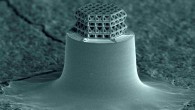
A team of scientists at the Karlsruhe Institute of Technology, Germany, has created a glassy carbon nanolattice with single struts shorter than 1 μm...