Anthropology News

May 11, 2023 by News Staff

Early humans and their hominin relatives had to adapt to new environments to spread out of Africa. In a new study, paleoanthropologists from the Institute for Basic Science, Pusan National University and elsewhere explored the movements of hominins across and preferences for different biomes by comparing six Homo species distributions from the fossil record against simulated climate and vegetation over the past 3 million years. They found that some...

May 10, 2023 by Enrico de Lazaro

In new research, scientists examined chemical properties locked inside tooth enamel of two Middle Paleolithic Neanderthals and a Magdalenian human from...

May 8, 2023 by News Staff

ATF3, a gene that leads to a taller nose (from top to bottom), may have been the product of natural selection as ancient humans adapted to colder climates...

May 4, 2023 by News Staff

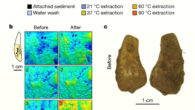
Application of a novel non-destructive DNA extraction method to a Paleolithic deer tooth pendant from Denisova Cave, Siberia, resulted in the recovery...

Mar 17, 2023 by News Staff

Among animals, humans stand out in their consummate propensity to self-induce altered states of mind. Archaeology, history and ethnography show these activities...

Mar 2, 2023 by News Staff

Modern humans have populated Europe for more than 45,000 years. However, our knowledge of the genetic relatedness and structure of ancient hunter-gatherers...

Feb 22, 2023 by News Staff

Different genetic traits can be beneficial (for example, fending off disease) or harmful (making humans more susceptible to illness), depending on the...

Feb 10, 2023 by Enrico de Lazaro

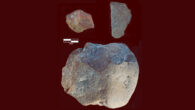
Oldowan tools, consisting of stones with one to a few flakes removed, are the oldest widespread and temporally persistent hominin tools. The oldest of...

Feb 2, 2023 by Enrico de Lazaro

Straight-tusked elephants (Palaeoloxodon antiquus) were the largest terrestrial mammals of the Pleistocene epoch, present in Europe and western Asia between...

Jan 24, 2023 by The Conversation

Neanderthal art was perhaps more abstract than the stereotypical figure and animal cave paintings Homo sapiens made after Neanderthals disappeared about...

Jan 6, 2023 by News Staff

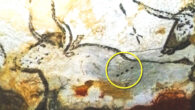
In at least 400 European caves such as Lascaux, Chauvet and Altamira, Upper Paleolithic humans drew, painted and engraved non-figurative signs from at...

Dec 27, 2022 by News Staff

In new research, led by the University of California, Santa Cruz and Princeton University, scientists reconstructed the history of sea level at the Bering...

Dec 23, 2022 by Enrico de Lazaro

Researchers from the University of Tübingen and elsewhere have unearthed the cutmarked bones of cave bears at the Middle Pleistocene site of Schöningen...

Dec 15, 2022 by Enrico de Lazaro

Scientists at the University of Tübingen have performed a careful and in-depth analysis of tiny resharpening flakes from the famous Middle Pleistocene...

Dec 15, 2022 by News Staff

Bipedalism — walking upright on two legs — us a defining feature of the human lineage. It is thought to have evolved as forests retreated in...

Dec 9, 2022 by Enrico de Lazaro

Modern humans have admixed with multiple species of archaic hominins. Papuans, in particular, owe up to 5% of their genome to Denisovans, a sister group...

Dec 5, 2022 by News Staff

In the Copper Age, around 5,000 years ago, owl-shaped, engraved plaques were produced massively in the southwestern corner of the Iberian Peninsula. Researchers...

Nov 15, 2022 by Enrico de Lazaro

Archaeologists have found the 780,000-year-old remains of a cooked carp-like fish at the wetland Acheulean site of Gesher Benot Ya’aqov in Israel. Ancient...

Nov 11, 2022 by Enrico de Lazaro

The possible track-makers are individuals from the Neanderthal lineage, according to new research led by Universidad de Huelva paleoanthropologists. The...

Oct 19, 2022 by Enrico de Lazaro

Paleoanthropologists have explored the social organization of Neanderthals using ancient nuclear, Y-chromosomal and mitochondrial DNA data from the remains...