Researchers have discovered 6-million-year-old-ice and air in shallow ice cores drilled in the Allan Hills region of East Antarctica. They speculate that...
A new genus and species of theropod dinosaur being named Anteavis crurilongus has been described by a team of paleontologists from the Universidad Nacional...
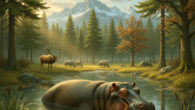
A small, isolated population of common hippos (Hippopotamus amphibius) was present in the Upper Rhine Graben in southwestern Germany during the middle...
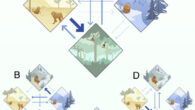
New research introduces a paleoenvironmental model in which tidal dynamics influenced the earliest development of agriculture and sociopolitical complexity...
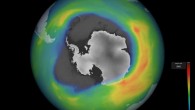
While banning ozone-destroying gases such as CFCs has helped the ozone layer to recover, when combined with increased air pollution the impact of ozone...
Textbooks often portray primates as originating, evolving, and dispersing exclusively within warm tropical forests. This tends to come from fossil evidence...
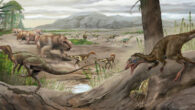
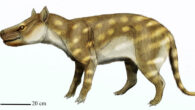
During the Paleocene-Eocene Thermal Maximum (PETM), a period of geological rapid warming and aridification approximately 56 million years ago, a flesh-eating...
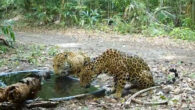
Scientists with the Wildlife Conservation Society have documented a remarkable diversity of wildlife visiting the artificial watering holes in Guatemala’s...
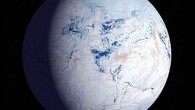
During periods known as Snowball Earth, between 720 and 635 million years ago, early eukaryotes — complex cellular lifeforms that eventually evolved...
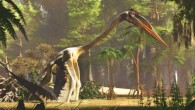
In new research, paleontologists combined data on the distribution of Triassic pterosauromorph (pterosaur + lagerpetid) fossils with information on the...
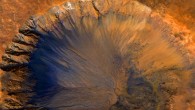
Slope streaks are dark features on Martian slopes that form spontaneously and fade over years to decades. Some planetary scientists have interpreted those...
Today, there are only two sloth species, but historically, there were dozens of them, including one with a bottle-nosed snout that ate ants and another...
Recognizable from the starring role in the film ‘Finding Nemo,’ the clown anemonefish (Amphiprion percula) also shrink in order to avoid social conflict,...
The genus Tyrannosaurus most likely arose in North America, although its direct ancestors migrated over from Asia more than 70 million years ago, according...
Observations of large valley networks on today’s Mars suggest formation by flowing water. However, most climate models cannot sustain temperatures above...
The Saharo-Arabian Desert is one of the largest biogeographical barriers on Earth, impeding dispersals between Africa and Eurasia, including movements...
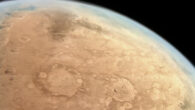
Atmospheric gravity waves play a crucial role in driving latitudinal air currents on the Red Planet, particularly at high altitudes, according to a new...
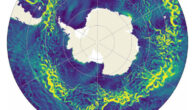
More than four times stronger than the Gulf Stream, the Antarctic Circumpolar Current (ACC) is the world’s strongest ocean current and plays a disproportionate...
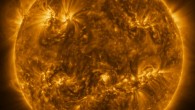
Heat from our Sun drives atmospheric temperature changes on Earth, which in turn can affect things like rock properties and underground water movement,...
Called ferrihydrite, this iron mineral formed during a cold, wet period on early Mars under oxidative conditions, followed by a transition to the current...