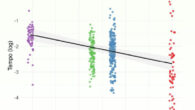
New research from Columbia University found that adults who cut their sleep by about 80 minutes for six weeks packed on a pound (0.45 kg) and moved less...
People who naturally stay up late may be more prone to obesity and poorer metabolic health in part because they consume more of their daily calories late...
When paleoanthropologists announced the discovery of Homo floresiensis on the Indonesian island of Flores in 2003, the tiny, small-brained species quickly...
For the first time, researchers have extracted ancient human DNA directly from the walls of a cave. Although their results do not conclusively link ancient...
Scientists have generated genetic data from 27 Neanderthals who lived in Belgium and France less than approximately 52,500 years ago, painting a richer...
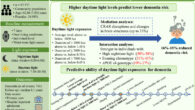
Researchers at Guangzhou Medical University tracked nearly 88,000 people for over eight years, finding a significant link between daytime light exposure...
Domestic cats (Felis catus) develop the same patterns of brain shrinkage and neurological decline as aging humans, and scientists think that makes them...
Scientists have uncovered compelling new evidence that early human ancestors, likely Homo erectus, were deliberately bringing fire into Wonderwerk Cave...
Geochemical analysis of 780,000-year-old stone tools from Israel suggests Acheulean (or Acheulian) hominins repeatedly sought specific basalt sources,...
In a small randomized trial in the United Kingdom, adults who added a serving of 100% fruit juice or a smoothie to a healthier diet reported lower depression...
In a small clinical trial, researchers at the Ohio State University found that a tomato juice rich in lycopene and soy isoflavones lowered several proteins...
New research led by scientists from the French National Institute for Agriculture, Food, and Environment (INRAE) suggests cows (Bos taurus taurus) can...
New research from the University of Oxford and the University of Reading suggests bipedalism and expanding brain size helped drive the overwhelming dominance...
An analysis of 27 animal studies found that switching to a healthier diet improved memory performance, though the effects were far weaker after diets high...
Grape consumption may improve the skin’s barrier against environmental damage by rewriting gene activity, according to new research led by Western New...
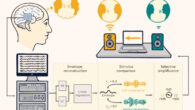
A team of U.S. researchers has demonstrated, for the first time in human trials, a device that reads brain signals to automatically amplify the voice a...