Biology News

Nov 22, 2017 by News Staff

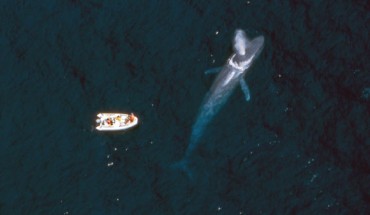
A group of marine biologists that used motion-sensing tags to track the movements of blue whales (Balaenoptera musculus) off the California coast discovered that most have a lateralization bias — in other words, they essentially are right- or left-handed. The study appears in the journal Current Biology. A blue whale (Balaenoptera musculus) spouts near a research boat. Image credit: Flip Nickin, Minden Pictures / Oregon State University / CC...

Nov 22, 2017 by News Staff

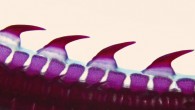
New findings from researchers at the University of Cambridge, UK, support the theory that teeth in the animal kingdom evolved from the jagged scales of...

Nov 22, 2017 by News Staff

Oxytocin, a powerful hormone produced by all mammals, including canines, is a key factor in the interaction between dogs and humans, according to a new...

Nov 20, 2017 by News Staff

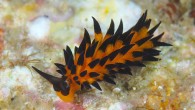
A team of researchers led by California State University’s Professor Patrick Krug has discovered three cryptic new species of sea slugs, and named one...

Nov 14, 2017 by News Staff

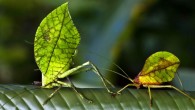
A team of entomologists from the University of Toronto Mississauga, Canada, and the University of Lincoln’s Joseph Banks Laboratories, UK, has discovered...

Nov 14, 2017 by News Staff

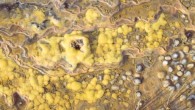
Tasmanian scientists have found living stromatolites (oldest known life form) in the Giblin River catchment of the UNESCO-listed Tasmanian Wilderness World...

Nov 13, 2017 by News Staff

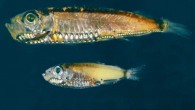
An international team of researchers has found a new photoreceptor type in the eyes of deep-sea pearlsides, which have an unusual visual system adapted...

Nov 10, 2017 by News Staff

According to a new study published in the journal Royal Society: Open Science, sheep can be trained to recognize familiar and unfamiliar human faces from...

Nov 8, 2017 by News Staff

A team of researchers from the Universities of Exeter, Brighton and Oxford has rejuvenated senescent cells to be functionally younger. This discovery builds...

Nov 7, 2017 by News Staff

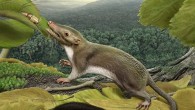
A long-standing theory holds that the common ancestor to all mammals was nocturnal, but new research from Tel Aviv University (TAU) and University College...

Nov 3, 2017 by News Staff

Honeybees (Apis mellifera) have individually distinct biases in ‘left- and right-handedness’ when flying through obstacles, according to new research...

Nov 2, 2017 by Natali Anderson

An international team of researchers has identified a new species of orangutan living on the Indonesian island of Sumatra. Named the Tapanuli orangutan...

Oct 25, 2017 by News Staff

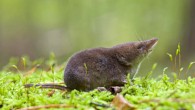
According to a study led by Dr. Javier Lazaro of the Max Planck Institute for Ornithology, the skulls of Eurasian shrews (Sorex araneus) shrink in anticipation...

Oct 24, 2017 by News Staff

According to a new study published in the Philosophical Transactions of the Royal Society B, ancient peoples began to systemically affect the evolution...

Oct 24, 2017 by News Staff

Researchers involved in the E. coli long-term evolution experiment (LTEE) have debunked an established evolutionary theory with a study that provides a...

Oct 24, 2017 by Natali Anderson

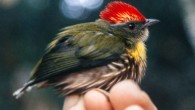
A new species of manakin, called Machaeropterus eckelberryi, has been discovered in the foothills of southwestern Loreto and northern San Martín departments,...

Oct 20, 2017 by News Staff

A team of researchers at the University of Portsmouth, UK, has found evidence that domestic dogs move their faces in direct response to human attention. Kaminski...

Oct 19, 2017 by News Staff

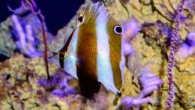
A team of marine biologists from Monterey Bay Aquarium and the California Academy of Sciences has discovered and described a new species of the butterflyfish...

Oct 18, 2017 by News Staff

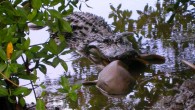
A new study published in the journal Southeastern Naturalist is the first to document that American alligators (Alligator mississippiensis) on the Atlantic...

Oct 16, 2017 by News Staff

A team of researchers led by Case Western Reserve University School of Medicine has discovered a conserved molecular pathway that controls lifespan and...