Biology News

Aug 16, 2023 by Enrico de Lazaro

Molecular de-extinction could offer avenues for drug discovery by reintroducing bioactive molecules that are no longer encoded by living organisms. Archaic human peptides display in vitro and in vivo antimicrobial activities with low host toxicity. Image credit: Ella Marushchenko. Human genomes and the genomes of our ancient ancestors express proteins with natural antimicrobial properties. Molecular de-extinction hypothesizes that these molecules...

Aug 9, 2023 by News Staff

The golden-crowned sparrow (Zonotrichia atricapilla) is a large species of New World sparrow found in the western part of North America. University of...

Aug 7, 2023 by Natali Anderson

The only known specimen of the small spotted cat species Leopardus narinensis was found on the Galeras Volcano in southern Colombia in 1989. The tigrina...

Aug 3, 2023 by News Staff

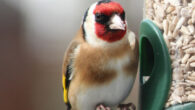
The global extent of supplementary bird feeding is unknown but has consequences for bird conservation and human well-being. Using a measure of search intensity...

Aug 2, 2023 by Natali Anderson

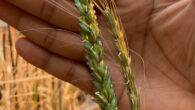
Einkorn (Triticum monococcum) was the first domesticated wheat species, and was central to the birth of agriculture and the Neolithic Revolution in the...

Aug 2, 2023 by News Staff

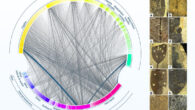
Plant-eating insects are the most diverse group of multicellular organisms on Earth. The most discussed drivers of their inordinate taxonomic and functional...

Aug 1, 2023 by News Staff

The thylacine (Thylacinus cynocephalus) is the largest of modern-day carnivorous marsupials and was hunted to extinction by European settlers in Australia....

Jul 31, 2023 by Natali Anderson

Marine biologists have described a new species of the shark genus Heterodontus from northwestern Australia based on six whole specimens and a single egg...

Jul 31, 2023 by News Staff

Bees are the most significant pollinators of flowering plants. This partnership began approximately 120 million years ago, but the uncertainty of how and...

Jul 31, 2023 by Enrico de Lazaro

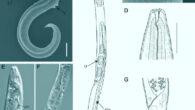
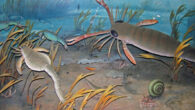
Precise radiocarbon dating indicates that Panagrolaimus kolymaensis, a species of soil nematode new to science, remained in cryptobiosis for about 46,000...

Jul 26, 2023 by Natali Anderson

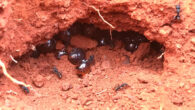
Honey produced by the Australian honeypot ant (Camponotus inflatus) is valued nutritionally and medicinally by Indigenous peoples. In a new study, scientists...

Jul 25, 2023 by News Staff

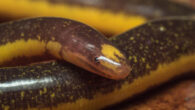
Living amphibians include frogs and salamanders and the limbless worm-like caecilians (order Gymnophiona). Caecilians have cylindrical bodies with a compact,...

Jul 24, 2023 by News Staff

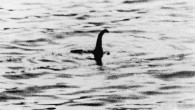
The ‘eel hypothesis’ proposes that the anthrozoological phenomenon at Loch Ness in Scotland can be explained in part by observations of large-bodied...

Jul 20, 2023 by News Staff

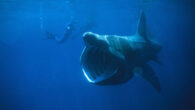
Few fast-swimming apex fishes are classified as regional endotherms, or partially warm-blooded, having evolved a relatively uncommon suite of traits (e.g....

Jul 11, 2023 by Natali Anderson

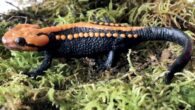
Scientists have described a new salamander species of the genus Tylototriton from evergreen montane forests on Ngoc Linh Mountain in the Central Highlands...

Jul 11, 2023 by News Staff

The evolution of life on Earth has changed dramatically at tens of million-year time scales. However, the causal mechanisms of these changes remain unclear....

Jul 10, 2023 by News Staff

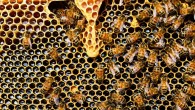
A new study published in the journal eLife elucidates the honeybee’s behavioral strategy to associate sensory cues with rewards of different values....

Jul 4, 2023 by Natali Anderson

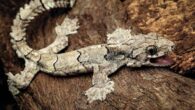
A team of researchers from Mizoram University and the Max Planck Institute for Biology has discovered a new species of the gecko genus Gekko living in...

Jul 4, 2023 by News Staff

Scientists from Ohio State University and elsewhere have developed a 3D computer model of the nose of the domestic cat (Felis catus) and simulated how...

Jun 28, 2023 by News Staff

Scientists from the Max Planck Institute for Brain Research and the Okinawa Institute of Science and Technology have studied camouflage in the common cuttlefish...