Astronomy News

Apr 28, 2025 by News Staff

Long invisible to astronomers, the newly-discovered molecular cloud is one of the largest single structures in the sky and among the closest to the Sun and Earth ever to be detected. The Eos cloud sits on the edge of the Local Bubble, a large gas-filled cavity in space that encompasses the Solar System. Image credit: Thomas Müller, HdA & MPIA / Thavisha Dharmawardena, NYU. Molecular clouds are composed of gas and dust — with the most common...

Apr 24, 2025 by News Staff

High-energy photons produced deep in gamma-ray burst jets emerging from a collapsed star could dissolve the outer stellar layers into free neutrons, causing...

Apr 23, 2025 by News Staff

The newly-discovered planet orbits at an angle of 90 degrees around 2MASS J15104786-2818174 (hereafter 2M1510), an eclipsing binary composed of two equal-mass...

Apr 22, 2025 by News Staff

Using data from NASA’s Transiting Exoplanet Survey Satellite (TESS), astronomers at MIT have discovered a rocky exoplanet orbiting the bright K-dwarf...

Apr 22, 2025 by News Staff

New research led by University of Hawai’i astronomers suggests our Universe may rotate — just extremely slowly. In shaping the Universe, gravity...

Apr 21, 2025 by News Staff

Highly ionized neon gas detected at the center of the spiral galaxy Messier 83 by the Mid-Infrared Instrument (MIRI) aboard the NASA/ESA/CSA James Webb...

Apr 21, 2025 by Enrico de Lazaro

As part of Hubble’s 35th anniversary celebrations, astronomers have obtained a stunning new image of a rich collection of scattered stars called Messier...

Apr 17, 2025 by News Staff

Astronomers using the NASA/ESA/CSA James Webb Space Telescope have detected the chemical fingerprints of dimethyl sulfide (DMS) and/or dimethyl disulfide...

Apr 16, 2025 by Enrico de Lazaro

In anticipation of the upcoming 35th anniversary of the NASA/ESA Hubble Space Telescope, the Hubble team has released a beautiful new image of the Sombrero...

Apr 16, 2025 by News Staff

Astronomers using the NASA/ESA/CSA James Webb Space Telescope have discovered an ultra-massive grand-design spiral galaxy that existed just one billion...

Apr 16, 2025 by News Staff

In general relativity, a gravitational white hole is a hypothetical region of space that cannot be entered from outside. It is the reverse of a black hole...

Apr 15, 2025 by NASA

SGR 0501+4516 is the likeliest candidate in our Milky Way Galaxy for a magnetar that was not born in a supernova explosion as initially predicted; the...

Apr 15, 2025 by News Staff

NGC 1514’s two central stars, which appear as one in the image from the NASA/ESA/CSA James Webb Space Telescope, formed this scene over thousands of...

Apr 14, 2025 by News Staff

Astronomers using the Gemini Multi-Object Spectrograph (GMOS) on the Gemini South telescope have determined that the recently-discovered near-Earth asteroid...

Apr 14, 2025 by Enrico de Lazaro

NASA has released an incredibly beautiful image taken by the Hubble Space Telescope of the barred spiral galaxy Messier 77. This Hubble image shows Messier...

Apr 10, 2025 by News Staff

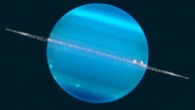
The rotation period of Uranus was estimated to be 17.24 hours in 1986 from radio auroral measurements made by NASA’s Voyager 2 spacecraft. Using the...

Apr 8, 2025 by Enrico de Lazaro

A new study by University of California, San Diego computational astrophysicist Ethan Nadler shows that star formation can occur in halos down to 10 million...

Apr 8, 2025 by Enrico de Lazaro

Astronomers using the MUSE instrument at ESO’s Very Large Telescope (VLT) have detected supermassive black hole-driven winds in the barred spiral galaxy...

Apr 7, 2025 by News Staff

Using advanced statistical modeling, a team of researchers from ETH Zurich, SETI Institute, the Università di Roma ‘Tor Vergata’ and the University...

Apr 7, 2025 by Enrico de Lazaro

Officially named Kohoutek 4-55, this little-known planetary nebula lies within our Milky Way Galaxy. This Hubble image shows Kohoutek 4-55, a planetary...