Astronomy News

Aug 23, 2021 by Enrico de Lazaro

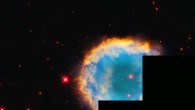
A new image taken with the NASA/ESA Hubble Space Telescope provides a detailed look at an open cluster known as NGC 2164. This Hubble image shows NGC 2164, a young open cluster located some 160,000 light-years away in the constellation of Dorado. The color image is made up of observations from Hubble’s Wide Field Camera 3 (WFC3) in the ultraviolet, near-infrared, and optical parts of the spectrum. It is based on data obtained through four filters....

Aug 20, 2021 by News Staff

The near-Sun comet C/2019 Y4 (ATLAS) is the first member of a long-period comet group observed to disintegrate well before its closest approach to the...

Aug 19, 2021 by News Staff

Using data from the Low Frequency Array (LOFAR), a radio telescope that operates at frequencies between 10 and 240 MHz and consists of 52 stations spread...

Aug 19, 2021 by News Staff

Astronomers using CSIRO’s Australian Square Kilometre Array Pathfinder (ASKAP) radio telescope have observed the Large Magellanic Cloud, a small satellite...

Aug 18, 2021 by News Staff

Astrophysicists have mapped the 3D locations and velocities of star-forming regions in a segment of the Sagittarius arm using data from NASA’s Spitzer...

Aug 17, 2021 by News Staff

The Ophiuchus star-forming complex is a complex of interstellar clouds, nebulae and prestellar cores in the constellation of Ophiuchus. At an estimated...

Aug 17, 2021 by News Staff

The 5.8-km-wide (3.6-mile) near-Earth asteroid Phaethon, which is the source of the annual Geminid meteor shower, brightens as it gets close to the Sun....

Aug 16, 2021 by Enrico de Lazaro

Astronomers using the NASA/ESA Hubble Space Telescope have taken a picture of a spiral galaxy called NGC 1385. This Hubble image shows the barred spiral...

Aug 11, 2021 by News Staff

On July 14, 2021, the Subaru-Asahi Sky Camera on the 8.2-m Subaru Telescope at the summit of Maunakea, Hawai’i, captured a rare meteor outburst associated...

Aug 10, 2021 by News Staff

Astronomers using CSIRO’s Australian Square Kilometre Array Pathfinder (ASKAP) telescope, a radio telescope situated about 800 km north of Perth, in...

Aug 9, 2021 by News Staff

Astronomers using NASA’s Transiting Exoplanet Survey Satellite (TESS) have studied large, long-duration flares in white light on red dwarfs, a class...

Aug 9, 2021 by News Staff

Astronomers using NASA’s Chandra X-ray Observatory and Neil Gehrels Swift Observatory have detected a set of eight X-ray rings around a low-mass black...

Aug 9, 2021 by Enrico de Lazaro

Thanks to the presence of a gravitational lens, the NASA/ESA Hubble Space Telescope has captured five separate images of 2M1310-1714, a quasar located...

Aug 6, 2021 by News Staff

NASA’s Transiting Exoplanet Survey Satellite hunts for exoplanets, but its sensitive measurements of stellar brightness make it ideal for studying stellar...

Aug 6, 2021 by Natali Anderson

The L 98-59 planetary system contains two non-transiting planets and three transiting terrestrial planets, one of which is a warm rocky world with half...

Aug 4, 2021 by News Staff

Astronomers using data from NASA’s Spitzer Space Telescope have looked for dust-extinguished supernovae in the nuclear regions of 40 luminous and ultra-luminous...

Aug 4, 2021 by News Staff

Using the NASA/ESA Hubble Space Telescope and NASA’s Transiting Exoplanet Survey Satellite (TESS), astronomers have detected 8.9-hr variability in both...

Aug 3, 2021 by Enrico de Lazaro

Astronomers with the COol Companions ON Ultrawide orbiTS (COCONUTS) program have directly imaged a massive exoplanet orbiting the low-mass red dwarf L...

Aug 2, 2021 by Natali Anderson

Astronomers from the Giant Outer Transiting Exoplanet Mass (GOT ’EM) Survey have discovered a long-period giant planet circling the 7.4-billion-year-old...

Aug 2, 2021 by Enrico de Lazaro

Using the Keck Planet Imager and Characterizer (KPIC) on the Keck II telescope at the W.M. Keck Observatory, astronomers have obtained and analyzed the...