Biology News

Sep 17, 2019 by News Staff

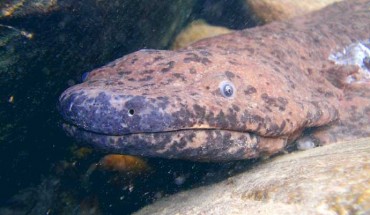
A team of researchers from the United Kingdom, Canada and China has discovered there are not just one but three distinct species of Chinese giant salamanders. One of these species, Andrias sligoi, is possibly the world’s biggest amphibian. Wild Chinese giant salamander. Image credit: Ben Tapley, Zoological Society of London. The Chinese giant salamander (Andrias davidianus) is a species of salamander endemic to China, where it is a top predator...

Sep 16, 2019 by Enrico de Lazaro

Smelly organic compounds from male cats are actually made not by the animals, but by bacteria living in their anal sacs, according to new research reported...

Sep 13, 2019 by News Staff

The electric eel (Electrophorus electricus) has long been assumed to be one species, but an international team of scientists has now discovered there are...

Sep 11, 2019 by News Staff

Human languages are comprised of meaningful words, which themselves are built from different combinations of meaningless sounds, or building blocks. A...

Sep 10, 2019 by News Staff

An international team of researchers has announced the results of investigations into the environmental DNA (eDNA) present in Loch Ness, a large freshwater...

Sep 6, 2019 by Shelby Traynor

For the small mammals foraging on the forest floor, reading your environment is essential to survival. When a hawk calls, a gray squirrel (Sciurus carolinensis)...

Sep 6, 2019 by News Staff

The blue-banded sea snake (Hydrophis cyanocinctus) uses a complex system of large blood vessels in its head to draw in extra oxygen when it dives and swims...

Aug 29, 2019 by News Staff

According to a study published in the journal eNeuro (bioRxiv.org preprint), changes in vibration-sensitive neurons may equip forager honeybees for waggle...

Aug 28, 2019 by News Staff

Carrion crows (Corvus corone), a species of songbird in the family of Corvidae, can voluntarily control the release and onset of their calls, suggesting...

Aug 26, 2019 by News Staff

New Caledonian crows (Corvus moneduloides) are well-known for their sophisticated tool use. According to a new study, these birds behave optimistically...

Aug 23, 2019 by News Staff

Pollen-borne microbes represent an important protein source for larval bees, according to new research. Newly-hatched blue mason bee larvae feeding on...

Aug 23, 2019 by News Staff

Azteca alfari, a tropical ant species found in North and South Americas, is better at limiting pathogenic microbes in its nest chambers than humans, according...

Aug 22, 2019 by News Staff

Reef manta rays (Mobula alfredi) form social bonds and actively choose their social partners, according to a study by researchers from the Marine Megafauna...

Aug 21, 2019 by News Staff

Methanoliparia, a species of archaea from deep-sea oil seeps of the Gulf of Mexico, splits long-chain hydrocarbons into methane and carbon dioxide, according...

Aug 20, 2019 by News Staff

Each spring and fall, millions of birds switch to migrating at night. Most of these are small songbirds migrating long distances that need to alternate...

Aug 19, 2019 by News Staff

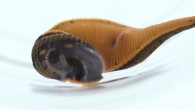
An international team of biologists has discovered and described a new species of medicinal leech living in the freshwater wetlands of the eastern United...

Aug 19, 2019 by News Staff

A team of scientists at Karolinska Institutet has discovered a previously unknown meshlike organ in the skin that is sensitive to painful mechanical damage,...

Aug 15, 2019 by News Staff

Crocodiles — and their plant-eating ancestors — have thin tooth enamel, a trait that is in stark contrast to humans and other hard-biting species,...

Aug 13, 2019 by News Staff

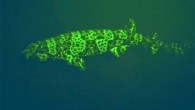
A team of U.S. researchers has discovered a previously undescribed group of small molecule metabolites responsible for the green biofluorescence in two...

Aug 8, 2019 by News Staff

A team of researchers from the University of Exeter, UK, put a bag of chips on the ground and tested how long it took herring gulls (Larus argentatus)...