Biology News

Oct 22, 2018 by News Staff

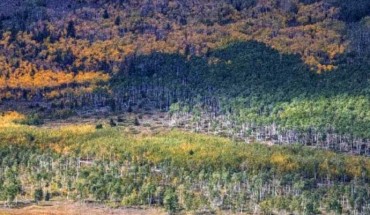
A team of researchers from Utah State University has conducted the first complete assessment of the Pando aspen clone — the largest living organism on Earth — and the results show continuing deterioration of this unique ‘forest of one tree.’ The Pando aspen clone from a distance (green foreground and middle — not yellow). Image credit: Lance Oditt, Studio 47.60° North. The Pando aspen clone, also known as the Trembling Giant,...

Oct 19, 2018 by News Staff

Wind-dispersed plants have evolved ingenious ways to lift their seeds. The common dandelion (Taraxacum officinale) uses a bundle of drag-enhancing bristles...

Oct 15, 2018 by News Staff

Why share when access to benefits is uncertain is crucial to our understanding of the evolution of cooperation in human societies. In a study published...

Oct 11, 2018 by News Staff

The total solar eclipse of 21 August 2017 traversed 5,000 km from coast to coast of North America. In its 90-min span, sunlight dropped by three orders...

Oct 8, 2018 by News Staff

According to a new study, published in the journal PeerJ, some features of a giraffe’s spot pattern are passed on from mother to baby. Newborn giraffes...

Oct 4, 2018 by News Staff

The groundcherry (Physalis pruinosa), also called ‘husk cherry’ and ‘strawberry tomato,’ is native to Central and South America. This tropical-tasting...

Oct 2, 2018 by News Staff

Colonies of the red harvester ant (Pogonomyrmex barbatus) forage in the desert for seeds that provide both food and water. Foragers lose water while out...

Sep 28, 2018 by News Staff

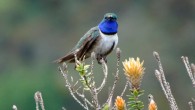
A new species of hummingbird, called the blue-throated hillstar (Oreotrochilus cyanolaemus), has been discovered in the southwestern Andes of Ecuador by...

Sep 27, 2018 by Enrico de Lazaro

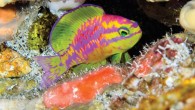
Marine biologists from the California Academy of Sciences have discovered a new species of coral reef fish living in the waters off Saint Paul’s Rocks,...

Sep 26, 2018 by News Staff

A new study published in the Proceedings of the National Academy of Sciences shows that honeybees exposed to glyphosate — the primary herbicide used...

Sep 26, 2018 by News Staff

Praying mantises are carnivorous insects with powerful raptorial front legs. Their diet includes insects, lizards, frogs, newts, mice, small birds, snakes...

Sep 24, 2018 by News Staff

Human skeletal stem cells capable of self-renewal and multilineage differentiation to bone, cartilage, and stroma have been isolated by Dr. Michael Longaker...

Sep 20, 2018 by News Staff

Scientists already know that bacteria can create an electric current outside their own cell, known as extracellular electron transport. This has been demonstrated...

Sep 20, 2018 by News Staff

A team of researchers from the Universities of Queensland and Sydney, Australia, has performed the first comprehensive characterization of a polypeptidic...

Sep 17, 2018 by Enrico de Lazaro

An international team of ornithologists has discovered a new species of drongo living in the forests of western Africa. A square-tailed drongo in Mkhuze...

Sep 13, 2018 by News Staff

Great apes of all species — human and non-human — communicate using a combination of different types of signals: vocalizations, gestures, facial...

Sep 7, 2018 by News Staff

Snakebites, contrary to public opinion, increase after rainy years, not drought, according to a new study that examined two decades of rattlesnake bite...

Sep 4, 2018 by News Staff

A research team led by University of Florida scientists has discovered two new species of ‘true’ truffles growing in the roots of pecan trees in the...

Sep 4, 2018 by News Staff

A new study published in the journal Royal Society Open Science provides the first evidence of how goats (Capra aegagrus hircus) read human emotional expressions. Nawroth...

Sep 3, 2018 by News Staff

A new paper published in the journal Biology Letters describes how tail walking was learned by a single bottlenose dolphin and then copied by other dolphins...