
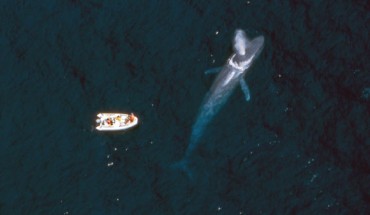
A group of marine biologists that used motion-sensing tags to track the movements of blue whales (Balaenoptera musculus) off the California coast discovered that most have a lateralization bias — in other words, they essentially are right- or left-handed. The study appears in the journal Current Biology. A blue whale (Balaenoptera musculus) spouts near a research boat. Image credit: Flip Nickin, Minden Pictures / Oregon State University / CC...




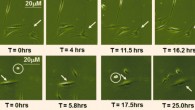









![KLFs are a subfamily of zinc finger transcriptional regulators with highly characterized roles in proliferation, survival, metabolism, and response to stress. Hsieh et al demonstrate that KLFs are critical determinants of aging, influencing both lifespan and age-related deterioration, and are broadly required for lifespan extension in all four mechanistically distinct longevity models tested. Importantly, the team provides evidence that these effects are mediated by KLF regulation of autophagy (autophagy was assessed using a GFP::LGG-1 translational reporter; GFP-positive puncta [red arrow] were counted in 30-150 total hypodermal seam cells in 10–20 animals) and are conserved in a mammalian system via a functional ortholog, KLF4. Together, the findings provide a role for the KLFs as a transcriptional regulatory point in longevity. Image credit: Hsieh et al, doi: 10.1038/s41467-017-00899-5.](https://cdn.sci.news/images/2017/10/image_5324-Aging-Pathway-195x110.jpg)