Biology News

Jan 31, 2018 by News Staff

Human skeletal muscles have an epigenetic memory of earlier encounters with growth, according to a Keele University-led study. According to Seaborne et al, ‘muscle memory’ exists at DNA level. Image credit: Composita. Using the latest genome wide techniques, Keele University researcher Adam Sharples and colleagues studied over 850,000 sites on human DNA and discovered the genes ‘marked’ or ‘unmarked’ with special chemical ‘tags’ when...
Jan 29, 2018 by News Staff

Enterococci are hardy microbes that thrive in the gastrointestinal tracts of nearly all land animals, including our own, and generally cause no harm. So...

Jan 26, 2018 by News Staff

Bigger honeybee colonies actually have quieter combs than smaller ones, according to a team of researchers at Cornell University, Ithaca. Larger honeybee...

Jan 25, 2018 by News Staff

Non-tailed double-stranded DNA (dsDNA) viruses infect bacteria and dominate water samples from the world’s oceans. They have long escaped analysis because...

Jan 24, 2018 by News Staff

Duke University Professor Jennifer Groh and co-authors have found that keeping the head still but shifting the eyes to one side or the other sparks vibrations...

Jan 23, 2018 by News Staff

Mining on the ocean floor could do irreversible damage to marine ecosystems, according to a new study from the University of Exeter and Greenpeace Research...

Jan 23, 2018 by News Staff

Female domestic cats are much more likely to use their right paw than males, according to a new study published in the journal Animal Behaviour. In the...

Jan 22, 2018 by News Staff

 A University of St Andrews-led study shows that New Caledonian crows (Corvus moneduloides) acquire hidden food several times faster when using hooked...

Jan 19, 2018 by News Staff

Viruses are the most abundant and one of the least understood biological entities on modern Earth. They might also exist in space, but as of yet scientists...

Jan 18, 2018 by News Staff

An international team of researchers from Ecuador and Peru has discovered two new frog species living in the tropical rainforests of the Amazon basin —...

Jan 17, 2018 by News Staff

Chameleons are small to mid-size tree-dwelling reptiles that are famous for their ability to change colors. A team of researchers from Germany has now...

Jan 11, 2018 by News Staff

There are approximately 42 million protein molecules in a simple cell, according to University of Toronto’s Professor Grant Brown and co-authors. Yeast...

Jan 10, 2018 by News Staff

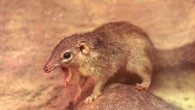
The common treeshrew (Tupaia glis) — a small mammal native to Thailand, Malaysia, and Indonesia — defies two widely tested rules that describe...

Jan 9, 2018 by News Staff

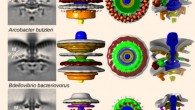
Using 3D images, biologists at Imperial College London, UK, have shown how bacteria have evolved their ‘flagellar’ motors of different powers to optimize...

Jan 9, 2018 by News Staff

A small coastal shark called the bonnethead shark (Sphyrna tiburo) eats copious amounts of seagrass (Thalassia testudinum) and has adaptations in its digestive...

Jan 5, 2018 by News Staff

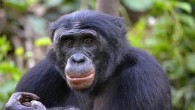
While humans generally prefer individuals who are nice to others, a new study finds bonobos (Pan paniscus) — our closest relatives in the animal...

Jan 4, 2018 by News Staff

Though calcium taste doesn’t fit into the five established tastes the tongue’s receptors can identify, humans describe it as slightly bitter and sour....

Jan 3, 2018 by News Staff

A team of scientists at the College of Engineering (CoE) in Pune, India, is developing an efficient method for monitoring and recognizing bird species...

Jan 2, 2018 by Enrico de Lazaro

A new species of large Pacific octopus has been discovered in the waters of Prince William Sound, Alaska. The frilled giant Pacific octopus. Image credit:...

Dec 27, 2017 by News Staff

An international team of ornithologists has revealed that a rare Amazonian bird called the golden-crowned manakin (Lepidothrix vilasboasi) — first...