Biology News

Jun 30, 2015 by News Staff

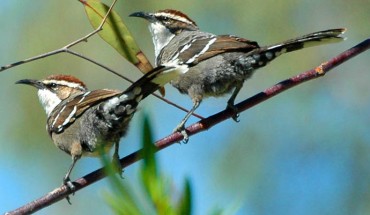
A new study led by Dr Sabrina Engesser from the University of Zurich, Switzerland, has revealed that the chestnut-crowned babbler (Pomatostomus ruficeps) – a highly cooperative bird of the Australian arid zone – is able to generate new meaning by rearranging combinations of meaningless sounds in its calls. This babbler bird communication is reminiscent of the way humans form meaningful words. Chestnut-crowned babblers (Pomatostomus ruficeps),...
Jun 25, 2015 by News Staff

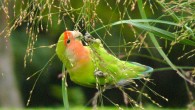
High-speed flight recordings of lovebirds making quick in flight turns reveal how these birds improve sight and shorten blur by rotating their head at...

Jun 25, 2015 by News Staff

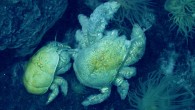
Marine biologists from British Antarctic Survey and the University of Southampton, UK, have described the first species of yeti crab known from the Southern...

Jun 24, 2015 by News Staff

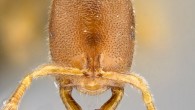
 California Academy of Sciences entomologists, Dr Rick Overson and Dr Brian Fisher, have described six new species of bizarre underground ants in the...

Jun 22, 2015 by News Staff

According to a new study published in the journal Science Advances, Earth’s biota is entering a sixth ‘great mass extinction.’ Earth at night seen...

Jun 19, 2015 by News Staff

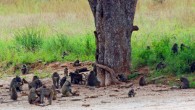
According to a new study published online in the journal Science, troops of Olive baboons (Papio anubis) decide where to move democratically. A troop of...

Jun 19, 2015 by News Staff

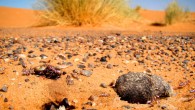
An international team of entomologists from the United States and Switzerland is the first to demonstrate that the Saharan silver ants (Cataglyphis bombycina)...

Jun 18, 2015 by News Staff

Kangaroos and other macropod marsupials display left-hand preference at the population level for everyday tasks in the wild, says a team of scientists...

Jun 16, 2015 by News Staff

In a new study published in the Proceedings of the National Academy of Sciences, marine biologists have found that, upon amputation, the moon jellyfish...

Jun 15, 2015 by News Staff

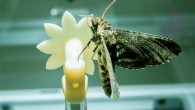
A new study published online in the journal Science suggests that both the sight and flight of the dusk-foraging hawkmoth (Manduca sexta) likely evolved...

Jun 12, 2015 by News Staff

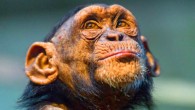
Chimpanzees have the same types of smiles as humans when laughing, says a new study published in the journal PLoS ONE. The study also found that chimpanzees...

Jun 9, 2015 by News Staff

More than 28,000 volunteers have helped scientists create a catalogue of more than 1.2 million camera trap images from Serengeti National Park, a UNESCO...

Jun 9, 2015 by News Staff

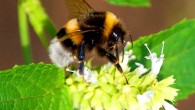
A new study published online in the journal PLoS ONE has found significant contamination of bumblebee pupae by the metal aluminum — a known neurotoxin...

Jun 4, 2015 by News Staff

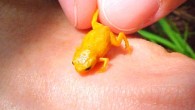
A group of scientists led by Prof Marcio Pie of the Universidade Federal do Paraná in Brazil has described seven new species of the frog genus Brachycephalus...

Jun 3, 2015 by News Staff

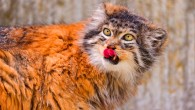
According to a new study published online in the journal BMC Neuroscience, taste receptors of felines respond in a unique way to bitter compounds compared...

Jun 3, 2015 by News Staff

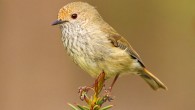
A tiny Australian bird, the brown thornbill (Acanthiza pusilla), mimics the hawk warning calls of neighboring bird species to protect its nest from predators...

Jun 3, 2015 by News Staff

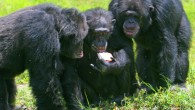
According to a new study published in the Proceedings of the Royal Society B, humans’ cognitive capacity for cooking is shared by chimpanzees (Pan sp.)....

Jun 2, 2015 by News Staff

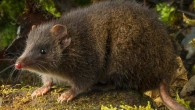
A team of scientists led by Dr Andrew Baker from Queensland University of Technology has described two new species of carnivorous marsupials from Australia. The...

Jun 1, 2015 by News Staff

A new study, led by Dr Demian Chapman from Stony Brook University, documents the first known cases of parthenogenesis – the ability of sexually reproducing...

May 26, 2015 by News Staff

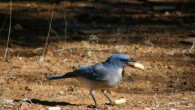
Using slow-motion video-recording and experiments, an international team of ornithologists has found that the Mexican Jays are able to ‘weigh’ peanuts...