Paleontology News

Feb 16, 2017 by News Staff

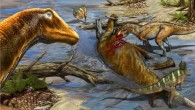
When you’re a small pre-mammalian creature, sometimes the only way to protect yourself against fearsome predators like saber-toothed carnivores is to turn your saliva into a venomous cocktail. That is exactly what a therocephalian therapsid called Euchambersia mirabilis did about 257 million years ago (Permian period) in what is now South Africa. Reconstruction of Euchambersia mirabilis; oblique ventro-lateral view showing the ridged dentition....

Feb 15, 2017 by News Staff

The first ever evidence of live birth in a group of animals previously thought only to lay eggs has been discovered by an international team of paleontologists...

Feb 6, 2017 by News Staff

Paleontologists have unearthed the remains of a previously unknown slug-like creature that lived during the Early Ordovician epoch, 478 million years ago....

Jan 31, 2017 by News Staff

A microscopic, bag-like marine creature that lived approximately 540 million years ago (Fortunian stage of the Cambrian period) has been identified from...

Jan 27, 2017 by Natali Anderson

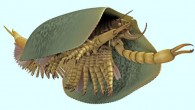
A research team led by Western Illinois University scientist Thomas Hegna has announced the discovery of two pyritized, egg-bearing specimens of the Ordovician...

Jan 26, 2017 by News Staff

In a paper published in the journal Cretaceous Research, Oregon State University researchers described a never-before-seen insect species found in a piece...

Jan 24, 2017 by News Staff

A team of paleontologists led by North Carolina State University researchers has isolated collagen peptides from the fossilized femur of Brachylophosaurus...

Jan 23, 2017 by News Staff

An international team of paleontologists has identified a new species of giant otter that lived in what is now China during the latest Miocene, approximately...

Jan 23, 2017 by News Staff

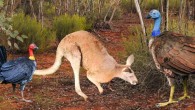
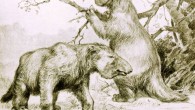
New evidence indicates the primary cause of megafaunal extinction in Australia 45,000 years ago was likely a result of humans, not climate change. A paper...

Jan 12, 2017 by News Staff

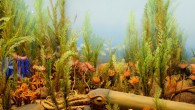
Paleontologists have finally determined what hyoliths — a group of extinct marine creatures — actually are. Reconstruction of the hyolith Haplophrentis...

Jan 4, 2017 by News Staff

CT scans of the fossilized skull of Dwykaselachus oosthuizeni — a shark-like fish that lived during the Permian period, around 280 million years...

Jan 3, 2017 by News Staff

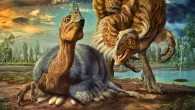
Non-avian dinosaur eggs took a long time to hatch — between 3 and 6 months, according to new research on the teeth of fossilized dinosaur embryos. Herds...

Dec 23, 2016 by News Staff

An international team of paleontologists has discovered that Limusaurus inextricabilis, a species of Jurassic dinosaur, lost its teeth in adolescence and...

Dec 20, 2016 by News Staff

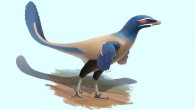
A team of paleontologists has found the remains of a prehistoric bird that lived 90 million years ago (Cretaceous period) in the Canadian Arctic. An artist’s...

Dec 9, 2016 by News Staff

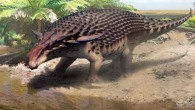
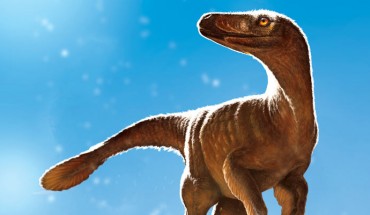
An international team of paleontologists from China, Canada and the United Kingdom has discovered the tail of a non-avian theropod dinosaur (likely a coelurosaur)...

Dec 5, 2016 by News Staff

Fossilized forewings (elytra) from two individuals, discovered at the Oliver Bluffs on the Beardmore Glacier, revealed the first ground beetle species...

Nov 25, 2016 by News Staff

An international team of paleontologists has found evidence of beta-keratin and melanosome preservation in a 130-million-year-old specimen of the Early...

Nov 16, 2016 by Enrico de Lazaro

A group of paleontologists led by University of Akron researcher Jennifer Peteya has discovered a new bohaiornithid bird specimen from the Cretaceous period...

Nov 10, 2016 by Enrico de Lazaro

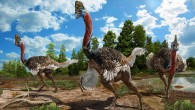
A new species of oviraptorid dinosaur has been discovered in southern China dating back approximately 69 million years to the latest Cretaceous period,...

Nov 2, 2016 by Enrico de Lazaro

The sabertooth salmon (Oncorhynchus rastrosus), a giant species of salmon that swam in Pacific Northwest waters from the mid-Miocene to early Pliocene,...