Paleontology News

Jan 5, 2012 by News Staff

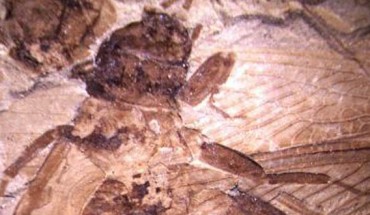
A team of researchers working at the National Evolutionary Synthesis Center has found that some insects such as crickets and katydids evolved their supersensitive hearing long before their predators came to be. 50 million-year-old fossil cricket (Dena Smith) A new study of 50 million year-old cricket and katydid fossils, published in the January 2012 issue of Journal of Paleontology, helps trace the evolution of the insect ear. “Insects hear with...

Dec 18, 2011 by Sergio Prostak

Chinese paleontologists have found fossil remains of a new species of pterosaur in Liaoning province, China. Xiaolin Wang from the Graduate University...

Dec 13, 2011 by News Staff

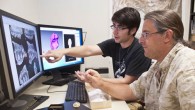
A team of researchers from the University of Chicago suggested that the ability to walk has originated underwater. It is known that tetrapods were the...

Dec 9, 2011 by News Staff

US palaeontologists have unearthed fossil bones of the biggest dinosaur to ever live in North America. The study, published this week in the journal Acta...

Dec 8, 2011 by News Staff

An international team of palaeontologists has discovered the fossilized eyes belonging to an ancient giant shrimp-like marine creature. Artist's impression...

Dec 6, 2011 by James Freeman

Russian palaeozoologists have discovered 40,000-year-old remains of a young woolly mammoth in Yakutia. Woolly Mammoth at the Royal BC Museum (Tracy O) The...

Nov 18, 2011 by James Freeman

Researchers from North America and China determined the date and rate of Earth’s most severe mass extinction. A paper in this week’s journal Science...

Nov 16, 2011 by James Freeman

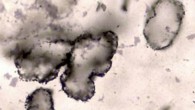
Geologists at MIT and Harvard University have unearthed rare, flask-shaped microfossils dating back 635 to 715 million years, representing the oldest known...

Nov 15, 2011 by James Freeman

The extinct giant ape, Gigantopithecus blacki, is a species of large hominoids that dominated the Pleistocene of South China. Its massive mandible, large...

Oct 11, 2011 by James Freeman

Long before whales, the oceans of Earth were roamed by a very different kind of air-breathing leviathan. Snaggle-toothed ichthyosaurs larger than school...

Sep 26, 2011 by James Freeman

Researchers have determined that two unusual wasps in amber found in New Jersey, USA represent a new family of wasps, according to a press release from...

Sep 14, 2011 by James Freeman

Researchers announced the discovery of a new species of large predatory fish that prowled ancient North American waterways during the Devonian Period,...

Sep 7, 2011 by James Freeman

Scientists from Institute of Vertebrate Paleontology and Paleoanthropology, Tianyu Museum of Nature in Shandong Province, China, and University of Kansas...

Sep 2, 2011 by James Freeman

The extinction of Ice Age giants such as woolly mammoths, woolly rhinos, giant sloths and saber-toothed cats has been widely studied, but much less is...

Aug 31, 2011 by James Freeman

A well-preserved fossil discovered in northeast China provides new information about the earliest ancestors of most of today’s mammal species. According...

Aug 23, 2011 by James Freeman

Harvard researchers have found that practice of processing food through cooking was likely invented by human’s early ancestors more than 1.9 million...

Aug 22, 2011 by James Freeman

The oldest fossil evidence for early life has been discovered in micrometre-sized pyrite crystals from the Strelley Pool Formation in Western Australia,...

Aug 16, 2011 by James Freeman

In a new study co-authored by University of Florida scientists, researchers recovered and analyzed the oldest fossil evidence of fingernails in modern...

Aug 10, 2011 by James Freeman

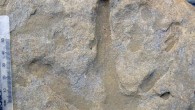
Paleontologists have discovered a group of more than 20 polar dinosaur tracks on the coast of Victoria, Australia, offering a rare glimpse into animal...