Planetary Science News
Sep 30, 2020 by News Staff

Early in the formation of Jupiter as a planet, it moved closer to and then away from the Sun due to interactions with the planetary disk of the young Solar System, and this movement likely triggered Venus onto a path toward its current, inhospitable state, according to a new paper published in the Planetary Science Journal. This composite image, taken by JAXA’s Akatsuki spacecraft, shows Venus. Image credit: JAXA / ISAS / DARTS / Damia Bouic. “Scientists...

Sep 28, 2020 by Natali Anderson

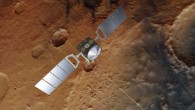
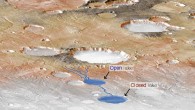
Using new radar data from ESA’s Mars Express spacecraft, researchers have detected three reservoirs of liquid water trapped below the south polar cap...

Sep 28, 2020 by Enrico de Lazaro

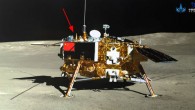
Using the Lunar Lander Neutrons and Dosimetry (LND) experiment aboard China’s Chang’E 4 lander, a team of researchers from Germany and China has measured...

Sep 24, 2020 by News Staff

A significant portion of some of the oldest terrain on Venus, known as tesserae, has striations consistent with layering, according to new research led...

Sep 22, 2020 by News Staff

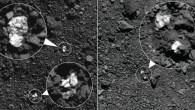
In 2019, scientists from the OSIRIS-REx team discovered several unusually bright boulders on the surface of near-Earth asteroid Bennu in images acquired...

Sep 21, 2020 by News Staff

Spectral data gathered by the Visual and Infrared Mapping Spectrometer (VIMS) onboard NASA’s Cassini spacecraft provide strong evidence that the northern...

Sep 11, 2020 by News Staff

Extrasolar planets hosted by stars with sufficiently high carbon-to-oxygen ratios could be made of diamonds and silica, according to new research by Arizona...

Sep 11, 2020 by News Staff

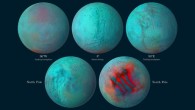
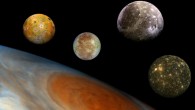
In a process called tidal heating, gravitational push and pull from Jupiter’s Galilean moons — Europa, Ganymede, Io and Callisto — and the...

Sep 7, 2020 by News Staff

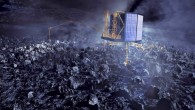
A new analysis of data gathered by the CONSERT (Comet Nucleus Sounding Experiment by Radio wave Transmission) instrument, a radar onboard ESA’s Rosetta...

Sep 2, 2020 by News Staff

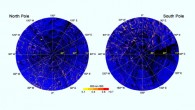
A ferric mineral called hematite (Fe2O3) is present at high latitudes on the Moon, mostly associated with east- and equator-facing sides of topographic...

Aug 31, 2020 by News Staff

A team of astrobiologists from NASA’s Goddard Space Flight Center and the Carnegie Institution for Science has found a wide diversity of amino acids...

Aug 28, 2020 by News Staff

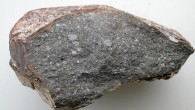
A type of meteorite called an enstatite chondrite has similar isotopic composition to terrestrial rocks and thus may be representative of the material...

Aug 21, 2020 by News Staff

Planetary researchers from the University of Texas at Austin and NASA’s Marshall Space Flight Center have used dry paleolakes and riverbeds to determine...

Aug 10, 2020 by News Staff

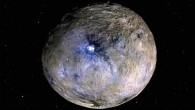
High-resolution observations from NASA’s Dawn spacecraft of mysterious bright spots (faculae) in Occator crater on the dwarf planet Ceres suggest the...

Aug 7, 2020 by News Staff

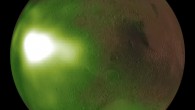
Using new data from the Imaging Ultraviolet Spectrograph (IUVS) on NASA’s MAVEN (Mars Atmosphere and Volatile Evolution) spacecraft, scientists have...

Aug 7, 2020 by News Staff

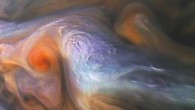
A new study suggests that during Jupiter’s violent storms, hailstones form from a cooled mixture of water and ammonia gas, similar to the process in...

Aug 6, 2020 by News Staff

An unexpected form of electrical discharge, ‘shallow lightning’ originates from Jovian clouds containing an ammonia-water solution, according to a...

Aug 6, 2020 by News Staff

The heliosphere is a giant magnetic bubble that contains our Solar System, the solar wind and the solar magnetic field. Outside the heliosphere is the...

Aug 5, 2020 by News Staff

NASA’s Curiosity rover has seen a lot since August 5, 2012, when it first set its wheels inside the huge basin of Gale Crater. Curiosity rover took this...

Aug 3, 2020 by News Staff

The southern highlands of Mars are dissected by hundreds of ancient valley networks (3.9-3.5 billion years old), which are evidence that water once sculpted...