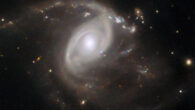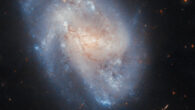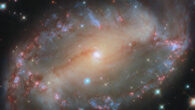
In 2018, astronomers observed that the corona of 1ES 1927+654, an actively accreting, 1.4-million-solar-mass black hole located in a galaxy around 270 million light-years away, suddenly disappeared, before reassembling months later. The brief though dramatic shut-off was a first in black hole astronomy. Now, astronomers using ESA’s XMM-Newton observatory caught the same black hole exhibiting more unprecedented behavior. They detected flashes of...