Biology News

Jun 27, 2023 by News Staff

Otodus megalodon was a gigantic megatooth shark that lived in the world’s oceans from 23 to 3.6 million years ago. It could grow to the enormous size of at least 15 m long, making it one of the largest apex marine predators since the Mesozoic. In new research, paleontologists tested hypotheses relating to Otodus megalodon’s extinction by providing quantitative estimates of its body temperature. They found that thereby constraining its thermal...
Jun 27, 2023 by News Staff

Placental mammals — the evolutionary lineage that includes humans — co-existed with non-avian dinosaurs for a short time before the dinosaurs...

Jun 26, 2023 by Sergio Prostak

Scientists from Queensland Museum have described three new species of carnivorous demosponges from the Great Barrier Reef, in Queensland, Australia. The...

Jun 26, 2023 by News Staff

Understanding how complex eukaryotic cells emerged from prokaryotic ancestors represents a major challenge in biology. A main point of contention in refining...

Jun 21, 2023 by News Staff

New research shows how the nematode Caenorhabditis elegans, a long-used model organism, can use electric fields to ‘jump’ across Petri plates or onto...

Jun 20, 2023 by News Staff

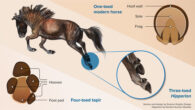
Ancient horses such as Hyracotherium leporinum, a tiny horse relative from the Eocene of England, had feet like those of a modern tapir: four toes in front...

Jun 20, 2023 by News Staff

Aerial parts of plants arrange their organs around stems, and this arrangement defines their structure. In most existing plant species, organs emerge at...

Jun 8, 2023 by Enrico de Lazaro

Using whole-genome sequencing and bioinformatic analysis, scientists provide the first evidence of facultative parthenogenesis in a crocodilian —...

Jun 6, 2023 by Natali Anderson

Most living angiosperms (flowering plants) are pollinated by insects, and the new reconstruction of the ancestral pollination mode of angiosperms suggests...

Jun 6, 2023 by Natali Anderson

The newly-identified species belongs to Mixophyes, an Australo-Papuan group of ground-dwelling frogs. The southern stuttering frog (Mixophyes australis)...

May 29, 2023 by Natali Anderson

Researchers have described a cryptic new species in the spiny-tailed gecko genus Strophurus from inland areas of southern Western Australia. Two individuals...

May 26, 2023 by News Staff

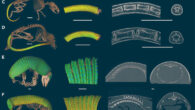
Osteoderms are bony plates found in the skin of vertebrates, mostly commonly in reptiles where they have evolved independently multiple times, suggesting...

May 24, 2023 by Natali Anderson

Researchers have described a new species of the fish genus Sturisoma from Madeira River basin in Bolivia and Brazil. Live specimen of Sturisoma reisi from...

May 22, 2023 by News Staff

Taking someone else’s visual perspective marks an evolutionary shift in the formation of advanced social cognition. It enables using others’ attention...

May 12, 2023 by News Staff

After the extinction of non-avian dinosaurs at the end of the Cretaceous period, many mammals underwent a rapid increase in size. Several hypotheses for...

May 5, 2023 by News Staff

The ability to make inferences based on statistical information has so far been tested only in animals having large brains in relation to their body size,...

May 3, 2023 by News Staff

Bose-Einstein condensation of excitons — in which excitons condense into a single coherent quantum state, known as an exciton condensate —...

May 2, 2023 by Natali Anderson

Scientists have described a new species of the jellyfish genus Tripedalia from an intertidal shrimp pond in the Mai Po Nature Reserve, Hong Kong. Morphological...

May 1, 2023 by News Staff

Over the past 100 million years, mammals have adapted to nearly every environment on Earth. Scientists with the Zoonomia Project have been cataloging the...

Apr 28, 2023 by Natali Anderson

The sled dog Balto has been celebrated in books and movies for his role in delivering desperately needed diphtheria antitoxin to Nome, Alaska, in 1925....