Biology News

Mar 2, 2015 by News Staff

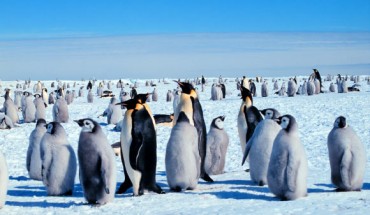
Only three populations of emperor penguins (Aptenodytes forsteri) survived during the last Ice Age (19,500 – 16,000 years ago), and the Ross Sea was likely the refuge for one of these populations, says a team of genetic researchers led by Jane Younger, a PhD student from the Australian Institute for Marine and Antarctic Sciences. Emperor penguins (Aptenodytes forsteri). Image credit: Michael Van Woert / NOAA / NESDIS / ORA. Emperor penguins...

Mar 2, 2015 by Natali Anderson

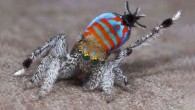
Biologists Dr Jurgen Otto and Dr David Hill have described two new species of spiders in the genus Maratus. Maratus jactatus, male. Image credit: Jurgen...

Feb 27, 2015 by News Staff

Cyanobacteria – also known as blue-green algae – have proliferated much more rapidly than other algae in lakes across North America and Europe...

Feb 26, 2015 by News Staff

When recalling memories, some individuals can remember items incorrectly. Tiny, buzzing little insects known as bumblebees can be unreliable witnesses...

Feb 25, 2015 by News Staff

A group of scientists led by Dr David Hu from the Georgia Institute of Technology has discovered that humans and 21 species of mammals – from hedgehogs,...

Feb 24, 2015 by News Staff

According to a group of ornithologists headed by Dr Lysanne Snijders of Wageningen University, the Netherlands, great tits living next to each other may...

Feb 24, 2015 by News Staff

A multinational group of entomologists led by Dr Thomas Hertach from the University of Basel has discovered a new species of singing cicada that occurs...

Feb 24, 2015 by News Staff

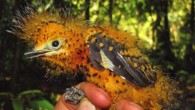
The chicks of an Amazonian bird called the Cinereous mourner (Laniocera hypopyrra) mimic toxic, hairy caterpillars of the flannel moths both in appearance...

Feb 24, 2015 by News Staff

According to experts from the World Wildlife Fund (WWF), the critically endangered Amur leopard (Panthera pardus orientalis) – one of ten living...

Feb 20, 2015 by News Staff

A study reported in the journal Science provides new support for the so-called Cope’s rule – a theory in biology that states that animals tend...

Feb 19, 2015 by News Staff

Marine biologists from Scripps Institution of Oceanography and the Western Australia Museum have made a surprising discovery in the waters off the coast...

Feb 19, 2015 by News Staff

Nicotine and other chemicals found in flowers of tobacco and other plants could be the right prescription for diseased bumblebees and bees, says a group...

Feb 18, 2015 by News Staff

According to a new study reported in the journal Evolutionary Biology, bottlenose dolphins (Tursiops truncatus) only colonized the Mediterranean after...

Feb 18, 2015 by News Staff

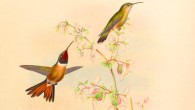
According to a group of ornithologists led by Dr Christopher James Clark of the University of California, Riverside, the two subspecies of a hummingbird...

Feb 16, 2015 by News Staff

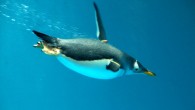
An international group of genetic scientists led by Prof Jianzhi Zhang from the University of Michigan has found that penguins lost three of the five basic...

Feb 13, 2015 by Natali Anderson

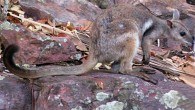
A new cryptic species of rock-wallaby has been described by a team of scientists led by Dr Sally Potter from the Australian Museum Research Institute and...

Feb 12, 2015 by News Staff

An international team of botanists led by Dr Thomas Couvreur from the Institut de Recherche pour le Développement in Montpellier has described a new genus...

Feb 12, 2015 by News Staff

Dogs can discriminate human emotional expressions, according to a new study carried out by scientists at the University of Veterinary Medicine in Vienna,...

Feb 11, 2015 by News Staff

Crocodiles think surfing waves, playing ball and going on piggyback rides are fun, too, according to Prof Vladimir Dinets from the University of Tennessee,...

Feb 6, 2015 by News Staff

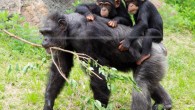
Chimpanzees (Pan troglodytes) have special grunt calls for particular types of foods. By studying what happened after two separate clans of adult chimps...