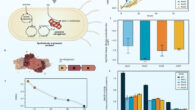
A team of researchers led by the University of Wisconsin-Madison has reverse-engineered a primordial nitrogen-fixing enzyme, illuminating how life thrived...
For more than 165 years, one of the earliest giants to rise above Earth’s barren land has defied classification. Known as Prototaxites, the towering,...
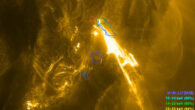
New high-resolution observations by ESA’s Solar Orbiter mission show that solar flares are driven by cascading magnetic reconnection events, unleashing...
Shorebirds are widespread birds whose dependence on coastal and wetland environments makes them effective paleoenvironmental indicators. Wading shorebirds...
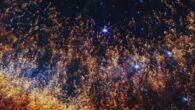
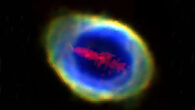
The new infrared image from the NASA/ESA/CSA James Webb Space Telescope reveals the complex structure of gas and dust shed by a white dwarf in the center...
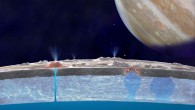
A duo of geophysicists from Washington State University and Virginia Tech has uncovered a plausible pathway for nutrient transfer from the radiation-charged...
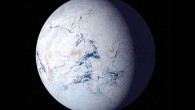
New research challenges conventional wisdom by demonstrating that mid-ocean ridges and continental rifts, not volcanic eruptions, played the central role...
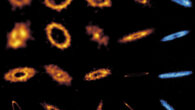
Astronomers using the Atacama Large Millimeter/submillimeter Array (ALMA) have produced the unprecedented high-resolution images of 24 debris disks —...
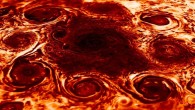
New research by MIT planetary scientists shows how striking differences in the polar vortex patterns of Jupiter and Saturn may be driven by deep interior...
According to new observations by NASA’s SPHEREx mission, the interstellar object 3I/ATLAS has dramatically changed its behavior, developing the hallmarks...
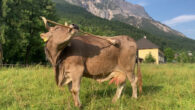
In a paper published today in the journal Current Biology, researchers at the University of Veterinary Medicine, Vienna, report the first experimental...
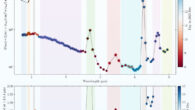
Dark matter may not have been ‘cold’ in the earliest moments after the Big Bang, as long believed; instead, new research from the University of Minnesota...
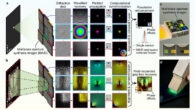
Inspired by a technique that allowed astronomers to image a black hole, scientists at the University of Connecticut developed a lens-free image sensor...
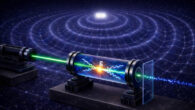
Stevens Institute of Technology physicist Igor Pikovski and colleagues are developing the first experiment designed to capture individual gravitons —...
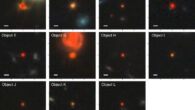
Astronomers using the WHT Enhanced Area Velocity Explorer (WEAVE), a powerful new instrument mounted on the William Herschel Telescope on La Palma, have...
A comprehensive analysis of 17 fossil specimens reveals that Tyrannosaurus rex grew far more slowly than previously thought — reaching its full-grown...
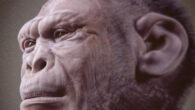
A newly-described partial skeleton from the Koobi Fora Formation in northern Kenya is giving paleoanthropologists their most complete picture yet of Homo...
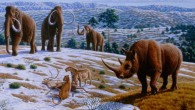
The woolly rhinoceros (Coelodonta antiquitatis) is a cold-adapted herbivore that went extinct around 14,000 years ago, but little is known about their...