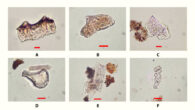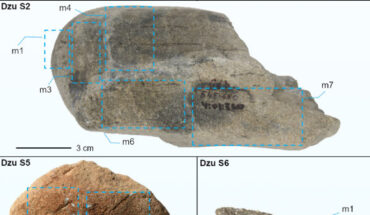
Archaeologists from the Ca’ Foscari University of Venice and elsewhere have found traces of indigotin — a blue secondary compound, also known as indigo — on unknapped ground stone tools recovered from Dzudzuana Cave, located in the foothills of the Caucasus in Georgia. Indigotin forms through a reaction between atmospheric oxygen and the natural glycoside precursors in the leaves of Isatis tinctoria. This proves that the plant, despite...