Archaeology News

Mar 31, 2026 by News Staff

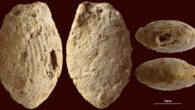
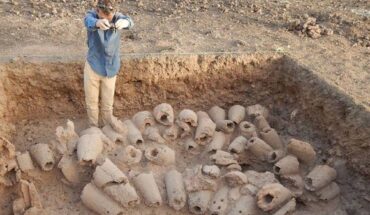
Excavations at the archaeological site of Didé West 1 in eastern Senegal have uncovered an exceptionally well-preserved iron-smelting workshop dated between the 4th century BCE and the 4th century CE, representing nearly eight centuries of activity. A pile of tuyères at the site of Didé West 1 in Senegal. Image credit: Anne Mayor. In Europe, the Iron Age is generally dated from around 800 BCE to the end of the first century CE. However, these chronological...

Mar 30, 2026 by News Staff

Both the Tasmanian tiger (Thylacinus cynocephalus) and the Tasmanian devil (Sarcophilus harrisii) are believed to have become extinct on the Australian...

Mar 26, 2026 by News Staff

Scientists have extracted and analyzed DNA from 216 canid remains, including 181 from Paleolithic and Mesolithic Europe. The oldest data that they recovered...

Mar 19, 2026 by News Staff

Examining 31 ancient societies across Europe, Asia, and the Americas, researchers found that democratic systems were more widespread than once believed...

Mar 19, 2026 by News Staff

A cache of 142 beads and pendants from five Natufian (15,000 to 11,650 years before the present) sites in Israel reveals that clay was first used not for...

Mar 18, 2026 by News Staff

New experiments show that tar made from birch bark — long known as a tool adhesive — can inhibit harmful bacteria such as Staphylococcus aureus,...

Mar 16, 2026 by Enrico de Lazaro

Chemical clues preserved in the teeth of straight-tusked elephants (Palaeoloxodon antiquus) from the 125,000-year-old site of Neumark-Nord in Germany suggest...

Mar 10, 2026 by News Staff

Ancient DNA from brightly colored feathers found in Peru shows that at least four distinct species of Amazonian parrots — the scarlet macaw (Ara...

Mar 5, 2026 by News Staff

An international team of archaeologists has examined a total of 85 pottery sherds with substantial amounts of foodcrusts from 13 archaeological sites across...

Feb 25, 2026 by Sergio Prostak

Early humans living in Europe some 40,000 years ago developed a conventional system of geometric signs — deliberate, repeatable markings that went...

Feb 11, 2026 by News Staff

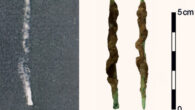
A tiny copper-alloy object long dismissed as a simple awl has been reclassified as the earliest known rotary metal drill from ancient Egypt. Original photograph...

Jan 27, 2026 by News Staff

Technological innovations in Africa and Western Europe in the later part of the Middle Pleistocene signal the behavioral complexity of hominin populations....

Jan 27, 2026 by Enrico de Lazaro

Archaeologists say they have discovered the ‘earliest known handheld wooden tools’ at the Middle Pleistocene site of Marathousa 1 in Greece. An artist’s...

Jan 13, 2026 by Enrico de Lazaro

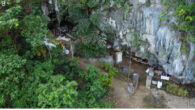
At Leang Bulu Bettue, a rock-shelter in the Maros-Pangkep karst region on the Indonesian island of Sulawesi, paleoanthropologists have uncovered one of...

Jan 8, 2026 by Enrico de Lazaro

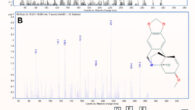
Archaeologists have identified traces of two toxic plant alkaloids — buphandrine and epibuphanisine — on artifacts from Umhlatuzana Rock Shelter...

Jan 7, 2026 by Enrico de Lazaro

The hominin fossils discovered in the Grotte à Hominidés at Thomas Quarry I in Casablanca, Morocco, are providing new evidence about the deep origins...

Jan 2, 2026 by Enrico de Lazaro

A research team led by Max Planck Institute for Evolutionary Anthropology scientists has generated the high-quality genome assembly of a Denisovan using...

Dec 30, 2025 by Enrico de Lazaro

In a new paper published this month in the journal iScience, researchers from the University of Tübingen and elsewhere present a multidisciplinary analysis...

Dec 29, 2025 by News Staff

Archaeologists from the University of Tübingen and the LMU Munich have unearthed the ruins of an ancient pottery workshop at the early Iron Age Dinka...

Dec 25, 2025 by Sergio Prostak

The Upper Paleolithic site of Mezhyrich, located in Cherkasy oblast, central Ukraine, is home to four remarkable mammoth bone structures. Ranging from...