New evidence from Germany suggests Neanderthals captured European pond turtles (Emys orbicularis) around 125,000 years ago, likely valuing their shells as tools rather than their modest meat yield.

The European pond turtle (Emys orbicularis) next to the foot of the straight-tusked elephant (Palaeoloxodon antiquus). Image credit: Nicole Viehofer / MONREPOS – LEIZA.
“In recent years, the diversity of Neanderthal prey choice has become well established, underlining their ecological adaptability and flexibility as well as a strong overlap with subsistence activities of Upper Paleolithic Homo sapiens,” said Professor Sabine Gaudzinski-Windheuser, a researcher at MONREPOS and the Johannes Gutenberg-University Mainz, and her colleagues.
“Beyond traditionally recognized medium- to large-sized mammals (such as horses, bovids, and deer), a broad spectrum of smaller mammals (such as leporids, birds and reptiles) has been added to the Neanderthal dietary repertoire, with straight-tusked elephants (Palaeoloxodon antiquus) with a weight up to 13.5 tons on the other end of their prey size distribution.”
“Additionally, evidence for the consumption of freshwater and marine resources, including shellfish and crabs, has been documented across the Mediterranean basin and the southwest Iberian peninsula.”
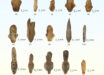
In new research, the authors examined 125,000-year-old turtle shell fragments found at the world-renowned Paleolithic site of Neumark-Nord in what is today Saxony-Anhalt, Germany.
Using methods including high-resolution 3D scanning, they found that many of the 92 fragments bear cut marks on their inner surfaces, indicating that the turtles were carefully butchered by Neanderthals — with limbs detached, internal organs removed, and the shells thoroughly cleaned.
“Our data provide the first evidence that Neanderthals also hunted and processed turtles north of the Alps, beyond the Mediterranean region,” Professor Gaudzinski-Windheuser said.
The researchers believe the turtles, identified as European pond turtles, were not used as a food source.
“We can virtually rule this out given the abundance of remains from large, high-yield prey animals at this site,” Professor Gaudzinski-Windheuser said.
“There was in all likelihood a complete caloric surplus.”
“With a weight of around one kilogram, pond turtles have a comparatively low nutritional value.”
“However, they are relatively easy to catch and may therefore have been hunted by children. Their shells may then have been processed into tools.”
“It is also possible that they were hunted for their taste or for an assumed medicinal value, a suggestion supported by findings from studies of later indigenous peoples.”
“Our current results shed new light on the ecological flexibility and complex survival strategies of Neanderthals, which went far beyond simple caloric maximization.”
The team’s results were published today in the journal Scientific Reports.
_____
S. Gaudzinski-Windheuser et al. 2026. Shell game: Neanderthal use of the European pond turtle (Emys orbicularis) in the Last Interglacial landscape of Neumark-Nord (Germany). Sci Rep 16, 8628; doi: 10.1038/s41598-026-42113-x