Biology News

Aug 24, 2020 by News Staff

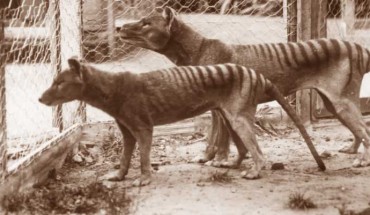
Until its extinction, the thylacine (Thylacinus cynocephalus) was the largest living carnivorous marsupial, but little data exist regarding its body mass, with an average of 29.5 kg the most commonly used estimate. However, a new study shows the extinct predator, also known as the Tasmanian tiger, only weighed about 16.7 kg on average. Tasmanian tigers (Thylacinus cynocephalus) in captivity. Image credit: University of Melbourne / Museums Victoria. Despite...

Aug 24, 2020 by Natali Anderson

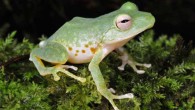
An international team of field biologists has described a new species of the frog genus Platymantis from Leyte and Samar islands, the Philippines. The...

Aug 20, 2020 by Enrico de Lazaro

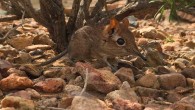
A team of researchers from the United States and the Republic of Djibouti has rediscovered the elusive Somali sengi (‘Elephantulus’ revoilii) over...

Aug 20, 2020 by News Staff

A special form of vocal feedback in humans, infant-directed speech — also known as motherese or ‘baby talk’ — facilitates language learning...

Aug 18, 2020 by News Staff

In a new study, an international team of scientists used 22 newly-sequenced genomes from 18 extant species of penguins to reconstruct the history of their...

Aug 14, 2020 by News Staff

In a new study published this month in the journal Biosensors and Bioelectronics: X, a team of scientists at Washington University in St. Louis showed...

Aug 13, 2020 by News Staff

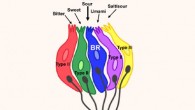
Scientists have discovered a new population of taste cells that can detect multiple types of stimuli, including chemicals from different taste qualities. Most...

Aug 12, 2020 by News Staff

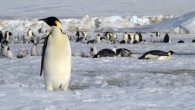
Using images from ESA’s Copernicus Sentinel-2 satellite, a team of researchers from the British Antarctic Survey has spotted 8 new colonies of emperor...

Aug 4, 2020 by News Staff

A team of mycologists from Oregon State University, the USDA Forestry Sciences Laboratory and Michigan State University has discovered a new species of...

Aug 4, 2020 by News Staff

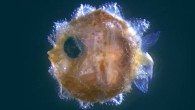
An international team of marine biologists has for the first time genetically identified a larva of the bump-head sunfish (Mola alexandrini). A larval...

Aug 3, 2020 by Sergio Prostak

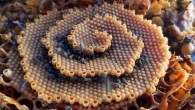
An unusual bioactive disaccharide called trehalulose is a major component of stingless bee honeys from Malaysia, Australia and Brazil, according to a new...

Jul 30, 2020 by News Staff

DNA usually forms the classic double helix shape — two strands wound around each other. Several other structures have been formed in the lab, but...

Jul 29, 2020 by News Staff

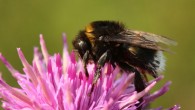
Buzzing by buff-tailed bumblebee (Bombus terrestris audax) workers during pollen foraging is much more powerful than that used for defense or flight, according...

Jul 29, 2020 by Natali Anderson

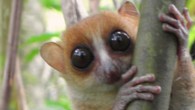
A species of mouse lemur believed to be new to science has been found in the tropical forests of northeastern Madagascar. Outer morphology of the Jonah’s...

Jul 28, 2020 by News Staff

A team of biologists from Japan and the United States has successfully revived aerobic microbes found in 101.5-million-year-old sediments from the abyssal...

Jul 28, 2020 by Enrico de Lazaro

A team of researchers from the University of York, the University of St Andrews and Unilever R&D has discovered a unique enzyme responsible for the...

Jul 27, 2020 by Sergio Prostak

According to a new study led by University of Cambridge researchers, the processes that drive atoms or molecules to aggregate as a crystal have the same...

Jul 24, 2020 by News Staff

A team of marine ecologists from Oregon State University has described the formation and development of a new methane seep — a location where methane...

Jul 21, 2020 by News Staff

A team of microbiologists at Caltech has discovered a species of bacterium that feeds on manganese, one of the most abundant elements on Earth. This SEM...

Jul 21, 2020 by News Staff

A research team led by Charles Darwin University biologists has identified and raised two additional species within what is currently designated as the...