Biology News

Oct 13, 2020 by Sergio Prostak

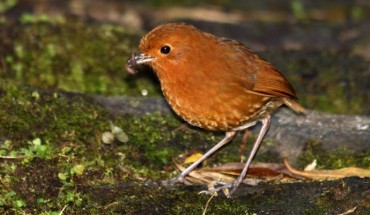
A team of ornithologists from the United States, Colombia and Denmark has described six new cryptic species in the rufous antpitta (Grallaria rufula) complex from montane forests of South America. The Muisca antpitta (Grallaria rufula). Image credit: Nigel Voaden / CC BY-SA 2.0. The rufous antpitta complex is a group of passerine birds that includes three species — the Muisca antpitta (Grallaria rufula), the bicolored antpitta (Grallaria rufocinerea)...

Oct 12, 2020 by News Staff

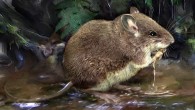
An international team of researchers has discovered two new species of the murine genus Colomys living in Africa: one in Liberia and Guinea and one in...

Oct 12, 2020 by News Staff

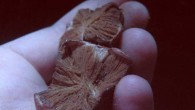
The median artery of the human forearm is an example of microevolutionary changes in the internal anatomy of the human body, according to new research...

Oct 8, 2020 by News Staff

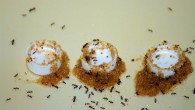
Black imported fire ants (Solenopsis richteri) have the remarkable ability to adapt its tool use: when provided with small containers of sugar water, they...

Oct 1, 2020 by News Staff

Plant guttation, a fluid from xylem and phloem sap secreted at the margins of leaves from many plant species, serves as a reliable and nutrient-rich food...

Sep 30, 2020 by News Staff

Fungi play a significant role in the diets and nutrition of diverse vertebrates. Many fungi, particularly truffle-like species, have evolved close associations...

Sep 29, 2020 by Enrico de Lazaro

In 2018, University of Portsmouth’s Professor John McGeehan and colleagues engineered an enzyme that can digest polyethylene terephthalate (PET), the...

Sep 24, 2020 by News Staff

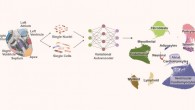
A multinational team of scientists led by Harvard Medical School, Brigham and Women’s Hospital, the Wellcome Sanger Institute, Max Delbrück Center for...

Sep 18, 2020 by News Staff

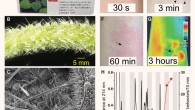
A team of scientists from the University of Queensland and King’s College London has found that the venom of Australian Dendrocnide trees contains previously...

Sep 16, 2020 by News Staff

Human white blood cells, or leukocytes, swim using a newly-described mechanism called molecular paddling, according to new research led by University Grenoble...

Sep 16, 2020 by News Staff

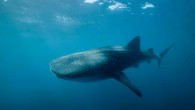
The whale shark (Rhincodon typus) is the world’s largest fish, growing to maximum known sizes of 18 m (59 feet) total length. A new study led by University...

Sep 14, 2020 by Enrico de Lazaro

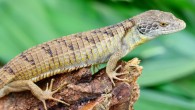
An international team of researchers has discovered a new species of the lizard genus Abronia living in the forests of western Chiapas, Mexico. Abronia...

Sep 9, 2020 by News Staff

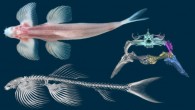
In a study published in the Journal of Morphology, an international team of scientists has pieced together the ancestral relationships that make up the...

Sep 9, 2020 by News Staff

According to new research published in the journal Animal Behaviour, European herring gulls (Larus argentatus) — a large species of seabird in the...

Sep 8, 2020 by News Staff

The founding population of the New Guinea singing dog, a small-to-medium-sized canid thought to be extinct in the wild since the 1970s, is not, in fact,...

Sep 4, 2020 by News Staff

A team of scientists from the University of Exeter has surveyed 56 cat owners, some from rural parts of the UK (mostly in south-west England) and some...

Sep 3, 2020 by News Staff

By analyzing leadership patterns of all-male African savannah elephant (Loxodonta africana) traveling groups along elephant pathways in the Makgadikgadi...

Sep 2, 2020 by News Staff

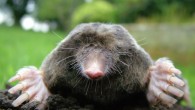
European moles (Talpa europaea) appear to avoid chewing on sand when eating earthworms because it is likely that they find the sensation as repulsive as...

Sep 1, 2020 by News Staff

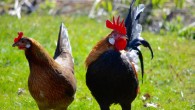
The red junglefowl (Gallus gallus), a species of tropical bird found in south-east Asia, is the primary ancestor of the domestic chicken (Gallus gallus...

Aug 26, 2020 by Natali Anderson

An international team of marine biologists has described two new species of the polychaete worm genus Melinnopsis from deep waters off the east coast of...