Biology News

Mar 1, 2018 by News Staff

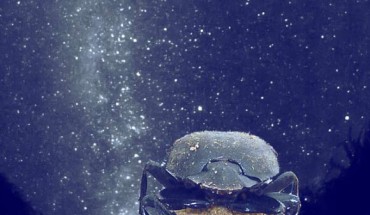
Nocturnal animals can use the stars and the Milky Way to find their way during the darkest hours, according to a new review article, published in the Proceedings of the Royal Society B. African dung beetles (Scarabaeus satyrus) use the glow of the Milky Way to navigate. Image credit: Emily Baird. In their article, Lund University biologist Dr. James Foster and co-authors assess the stars as a ‘visual stimulus that conveys directional information.’ They...

Feb 28, 2018 by News Staff

A new study by researchers from the University of Western Australia and the University of Exeter shows that in wild Australian magpies (Gymnorhina tibicen),...

Feb 28, 2018 by News Staff

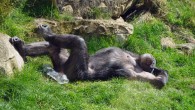
According to a study published in the journal PLoS Biology, two closely related great ape species — the bonobo (Pan paniscus) and the common chimpanzee...

Feb 27, 2018 by News Staff

An international team of scientists has uncovered information about the nerve networks required for walking on land, suggesting the last common ancestor...

Feb 27, 2018 by News Staff

An international team of scientists led by Museums Victoria and the University of Melbourne has scanned all known joey specimens of the Tasmanian tiger...

Feb 26, 2018 by News Staff

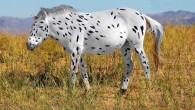
New research overturns a long-held assumption that Przewalski’s horses (Equus ferus przewalskii), a rare and endangered animal native to the steppes...

Feb 23, 2018 by News Staff

An international team of scientists led by Harvard Medical School’s Joslin Diabetes Center has identified four viruses that can produce insulin-like...

Feb 22, 2018 by News Staff

A team of scientists from the University of Edinburgh, UK, and the University of Turku, Finland, has investigated the personality structure of Asian elephants...

Feb 22, 2018 by News Staff

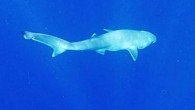
An international team of marine biologists from the United States and Belize has confirmed that sixgill sharks residing in the Atlantic Ocean are a different...

Feb 22, 2018 by News Staff

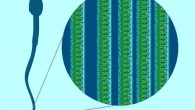
By using cryo-electron tomography, an international team of scientists has identified a completely new nanostructure — named the Tail Axoneme Intra-Lumenal...

Feb 20, 2018 by News Staff

An international team of lepidopterists has compiled the most comprehensive evolutionary tree for butterflies to date. The results appear in the journal...

Feb 19, 2018 by News Staff

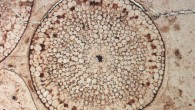
According to a new study to be published in the Proceedings of the National Academy of Sciences, the first plants to colonize the Earth originated around...

Feb 19, 2018 by Natali Anderson

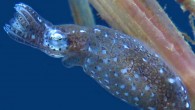
James Cook University researcher Dr. Jan Strugnell and Australian Museum Research Institute’s Dr. Mandy Reid have discovered and described a new species...

Feb 16, 2018 by News Staff

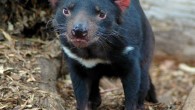
The overall population numbers of wild Tasmanian devils (Sarcophilus harrisii) are continuing to decline, due to the presence of a transmissible cancer,...

Feb 14, 2018 by News Staff

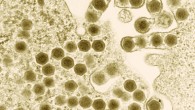
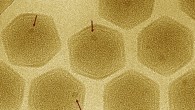
Dr. Albert Erives, a biologist at the University of Iowa, has identified a virus family whose set of genes is similar to that of eukaryotes, an organism...

Feb 9, 2018 by News Staff

Chimpanzees’ overall intelligence is correlated to their ability to exert self-control and delay gratification, according to a study published in the...

Feb 8, 2018 by News Staff

Angiosperms (flowering plants) are neither as old as suggested by previous molecular studies, nor as young as a literal interpretation of their fossil...

Feb 8, 2018 by News Staff

Viruses fall back to Earth via dust storms and precipitation, according to new research published in the International Society for Microbial Ecology Journal. Viruses...

Feb 7, 2018 by News Staff

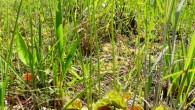
Scientists have for the first time discovered which insects pollinate a rare carnivorous plant called the Venus flytrap (Dionaea muscipula) — and...

Feb 5, 2018 by News Staff

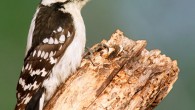
Woodpeckers experience forces up to 1,200-1,400 g while pecking. It is assumed due to evolutionary adaptations, the woodpecker is immune to brain injury....