Geology News

Nov 5, 2020 by Natali Anderson

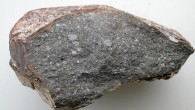
A team of researchers in Europe has identified a new high-pressure mineral in a lunar meteorite called Oued Awlitis 001. Fragments of Oued Awlitis 001. Image credit: Ludovic Ferrière, NHM Vienna. Oued Awlitis 001 is a feldspatic lunar meteorite that was found in 2014 in Western Sahara, Africa. The main fragment of the space rock, originally 382 g, was found on January 15, 2014 by a group of eight travelers. It is largely covered with a green to brownish...

Sep 8, 2020 by News Staff

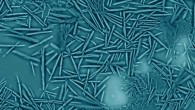
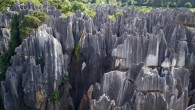
A new study, published in the Proceedings of the National Academy of Sciences, reveals a mechanism that may contribute to the formation of sharply pointed...

Aug 28, 2020 by News Staff

A type of meteorite called an enstatite chondrite has similar isotopic composition to terrestrial rocks and thus may be representative of the material...

Jun 23, 2020 by News Staff

An international team of geologists has found the first direct evidence that volcanic eruptions in the southern part of the Siberian Traps region 252 million...

May 15, 2020 by News Staff

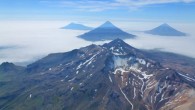
Pūhāhonu (‘turtle rising for breath’ in Hawaiian), a 13-million-year-old volcano in the northwest Hawaiian Ridge, is twice the size of Mauna Loa...

Apr 23, 2020 by News Staff

An analysis of rocks from the Honeyeater Basalt of the East Pilbara Craton, a stable block of crust in Western Australia, provides strong evidence that...

Apr 23, 2020 by News Staff

A team of researchers from the U.S. Geological Survey, the Lunar and Planetary Institute and the South Dakota School of Mines and Technology has released...

Mar 3, 2020 by News Staff

The surface of Earth was likely covered by a global ocean 3.24 billion years ago (Archean Eon), according to a new study published in the journal Nature...

Feb 10, 2020 by News Staff

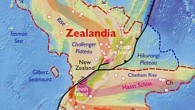
Zealandia — Earth’s seventh continent — experienced dramatic elevation changes between about 50 million and 35 million years ago, according...

Jan 22, 2020 by News Staff

The 70 km- (43.5-mile) diameter Yarrabubba impact structure in Western Australia is approximately 2.23 billion years old, according to new research led...

Jan 7, 2020 by News Staff

A team of researchers from the U.S. Geological Survey has mapped a rare earth element-bearning deposit in the Mountain Pass region of the eastern Mojave...

Dec 5, 2019 by News Staff

New research suggests that during the Late Cretaceous epoch to the Early Paleogene epoch (80-50 million years ago), much of the southwestern United States...

Nov 27, 2019 by News Staff

When and how the Earth evolved from a molten mass into a rocky planetary body continually resurfaced by plate tectonics remain some of the biggest questions...

Nov 6, 2019 by News Staff

Fractured rocks of impact craters may be suitable hosts for deep microbial communities on Earth and potentially other terrestrial planets, yet direct evidence...

Nov 5, 2019 by News Staff

A previously unrecognized mode of fossilization of ancient microbes may explain how some of Earth’s oldest microfossils formed, according to new research. Rasmussen...

Oct 25, 2019 by News Staff

The Akkadian Empire, the first united empire in Mesopotamia, was established around 2300 BCE and abruptly collapsed two centuries later. According to a...

Oct 23, 2019 by News Staff

A team of geoscientists from Australia, Canada and the UK has detected primordial chemical signatures preserved within young kimberlites, small-volume...

Oct 16, 2019 by News Staff

In a paper published in the journal Geology, Dr. Juan Manuel García-Ruiz from the Universidad de Granada and colleagues reveal the geological history...

Oct 3, 2019 by News Staff

Researchers have found exceptionally preserved organic matter inside samples of rock from the 3.5-billion-year-old Dresser Formation in the Pilbara region...

Sep 25, 2019 by News Staff

The Sahara Desert is the largest warm desert in the world, but its age has been controversial, with estimates ranging from the Miocene epoch (23-5.3 million...