Other Sciences News

Apr 24, 2013 by News Staff

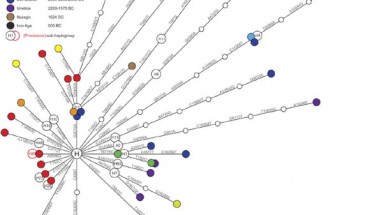
An international team of scientists has used ancient DNA recovered from human remains dating from up to 5,500 BC to reconstruct the first detailed genetic history of modern Europe. This image shows phylogenetic network of 39 prehistoric mitochondrial genomes sorted into two groupings – Early Neolithic, left, and Mid-to-Late Neolithic, right. Node colors represent archaeological cultures. LBK – Linear Pottery Culture (Paul Brotherton et...

Apr 19, 2013 by Sergio Prostak

A team of researchers at the University of California San Diego has created ‘nanosponges’ capable of removing a broad class of toxins from the bloodstream,...

Apr 19, 2013 by Natali Anderson

A new research headed by Prof Joanna Berzowska from the Concordia University’s Department of Design and Computation Arts brings the future of fashion...

Apr 18, 2013 by News Staff

A team of neuroscientists from the University of Texas Medical School at Houston reversed memory loss in nerve cells of the California sea hare (Aplysia...

Apr 15, 2013 by Enrico de Lazaro

New research appearing in six papers in the journal Science describes how the hominid Australopithecus sediba walked, chewed, and moved around 2 million...

Apr 12, 2013 by News Staff

A giant mass of warm water that stretched out from Indonesia over to Africa and South America about 4 million years ago suggests current climate models...

Apr 12, 2013 by Natali Anderson

According to a study conducted by Dr Jemma McCready and Dr Mark Moss from the University of Northumbria, England, the aroma of rosemary oil may improve...

Apr 11, 2013 by Sergio Prostak

Researchers from the Florida Institute of Technology’s Department of Physics and Space Science have developed a new model of exactly how terrestrial...

Apr 9, 2013 by Natali Anderson

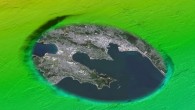
A multinational team of researchers led by marine geophysicist Dr Bryan Davy from GNS Science has found what may be the world’s biggest pockmarks...

Apr 5, 2013 by News Staff

An object that killed the dinosaurs roughly 66 million years ago may have been a comet, rather than an asteroid, say researchers Prof Jason Moore and Prof...

Apr 1, 2013 by News Staff

A team of researchers led by Dr Marcelo Wood from the University of California at Irvine has discovered a new molecular mechanism that helps trigger long-term...

Mar 28, 2013 by News Staff

Chicxulub, an asteroid that collided with the Earth 66 million years ago and is believed to wipe out the dinosaurs, may have triggered a global firestorm...

Mar 20, 2013 by Natali Anderson

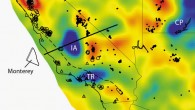
Geophysicists suggest that large chunks of an ancient tectonic plate known as the Farallon Plate are still present under parts of central California and...

Mar 19, 2013 by Sergio Prostak

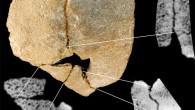
Fragments of an early human skull dating back 100,000 years exhibit a now-rare congenital deformation that indicates inbreeding might well have been common...

Mar 15, 2013 by Natali Anderson

Scientists from Singapore and Belgium have successfully altered the properties of water, making it corrosive enough to etch diamonds. Diamond particles...

Feb 27, 2013 by Sergio Prostak

Researchers at Yale University and the Texas Tech University have found a way of predicting whether a given glass will be ductile or brittle. A glass sculpture...

Feb 25, 2013 by Natali Anderson

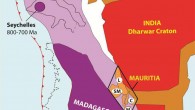
According to a study published in the latest issue of the journal Nature Geoscience, the islands Reunion and Mauritius are hiding a Precambrian microcontinent...

Feb 22, 2013 by Sergio Prostak

By studying a bright blue pigment used in Ancient Egypt about 5,000 years ago, U.S. chemists have uncovered clues toward the development of new nanomaterials...

Feb 12, 2013 by Enrico de Lazaro

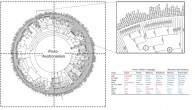
An international team of scientists has used a new automated tool to reconstruct protolanguages – ancient tongues from which modern languages evolved. This...

Feb 8, 2013 by Sergio Prostak

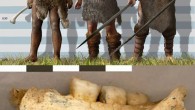
According to a research published in the open access journal PLoS ONE, a 400k year old fragment of human lower jaw recovered from a Serbian cave is the...