Paleontology News

Oct 17, 2015 by News Staff

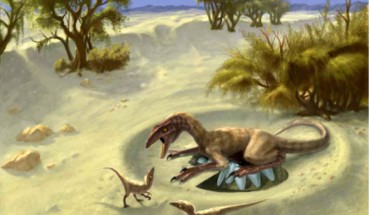
Some species of dinosaurs had the ability to warm themselves by drawing heat from the Sun, according to an international team of paleontologists from the United States, Argentina, France, and Denmark. Paleontologists used a novel technique to find out dinosaurs’ body temperatures based on their eggshells. Image credit: Gerald Grenet-Tinnes. The team, led by Prof. Robert Eagle of the University of California, Los Angeles, believes the ancient reptiles...

Oct 15, 2015 by News Staff

An international team of paleontologists from Belgium, France and Mongolia, has unearthed an exceptional block of perinatal specimens (babies) of the giant...

Oct 14, 2015 by News Staff

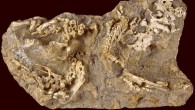
An international team of paleontologists has discovered a 125-million-year-old ancient mammal fossil, which has been named a new species, in Spain. According...

Oct 8, 2015 by News Staff

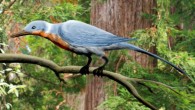
Early birds were capable of performing aerodynamic feats in a manner similar to their modern-day counterparts, according to a team of paleontologists from...

Oct 8, 2015 by News Staff

The evolution likely occurred in two stages as one of the animal’s neck vertebrae stretched first toward the head and then toward the tail a few million...

Oct 8, 2015 by News Staff

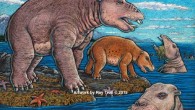
A new genus and species of desmostylian mammal that lived about 23 million years ago (early Miocene) has been identified from fossils found on Unalaska,...

Oct 5, 2015 by News Staff

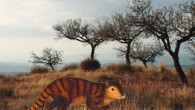
An international team of paleontologists has found a specimen of a previously unknown species of mammal from the early Paleocene, about 65 million years...

Oct 2, 2015 by News Staff

A new species – and genus – of armored jawless fish has come to light in the Chinese rocks dating to the Pragian stage of Devonian. An artist’s...

Oct 2, 2015 by News Staff

An international team of scientists from India and the United States has uncovered evidence that a massive comet or asteroid impact on Earth 66 million...

Sep 30, 2015 by News Staff

Dr George Poinar Jr. of Oregon State University has found a fossilized flea carrying ancient coccobacillus bacteria. The discovery was announced in the...

Sep 29, 2015 by News Staff

A team of paleontologists from the United States and the United Kingdom has discovered the reddish brown color of extinct bats from fossils dating back...

Sep 24, 2015 by News Staff

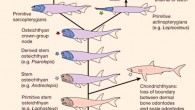
According to a new study, published this week in the journal Nature, enamel evolved in the skin and colonized the teeth much later. Early evolution of...

Sep 23, 2015 by News Staff

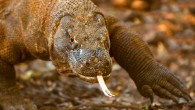
Australia’s early human inhabitants had to contend with giant killer lizards, according to a team of paleontologists from the University of Queensland,...

Sep 23, 2015 by News Staff

Paleontologist Prof. Kenshu Shimada of DePaul University and his colleagues have discovered a new genus of extinct planktivorous (plankton-eating) sharks. Pseudomegachasma...

Sep 22, 2015 by News Staff

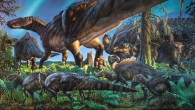
A new species of hadrosaurid dinosaur has been identified from bones discovered in the Prince Creek Formation of northern Alaska. An artist’s depiction...

Sep 21, 2015 by News Staff

A new genus and species of coelacanth has been identified from fossils found in a 360 million year-old fossil estuary near Grahamstown, in the Eastern...

Sep 21, 2015 by News Staff

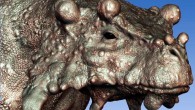
Bunostegos akokanensis – a Permian cow-sized, herbivorous reptile with a knobby skull and bony armor down its back – is the oldest known creature...

Sep 14, 2015 by News Staff

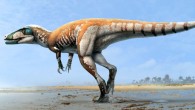
A remarkable new species of theropod dinosaur has been unearthed in an underground mine in north-central New South Wales, Australia. Illustration of the...

Sep 7, 2015 by News Staff

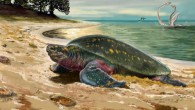
A new species of ancient sea turtle has been identified from fossils found in Colombia. The fossils are at least 120 million years old, about 10 million...

Sep 7, 2015 by News Staff

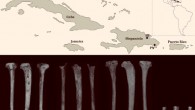
A multinational group of paleontologists has dated a species of fossil monkey, the Hispaniola monkey (Antillothrix bernensis), to over one million years...