Biology News

Sep 18, 2016 by News Staff

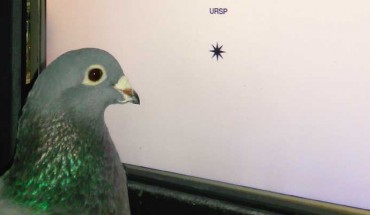
Pigeons (Columba livia) can learn to distinguish real words from non-words by visually processing their letter combinations, according to a surprising new study led by University of Otago researchers. Damian Scarf et al. demonstrate that pigeons (Columba livia) trained to discriminate words from non-words picked up on the orthographic properties that define words and used this knowledge to identify words they had never seen before. Image credit: Damian...

Sep 15, 2016 by News Staff

A team of entomologists led by Utah State University researcher Dr. Michael Orr has described an unusual new species of bee from the deserts of the southwestern...

Sep 15, 2016 by News Staff

A team of scientists led by Dr. Christian Rutz, a researcher at the Centre for Biological Diversity at the University of St Andrews, UK, has discovered...

Sep 12, 2016 by News Staff

A Lawrence Livermore National Laboratory-led interdisciplinary research team has developed the first-ever biological identification method that exploits...

Sep 9, 2016 by News Staff

Giraffes actually are not one species, but four, according to a new study published in the journal Current Biology. Reticulated giraffe (G. reticulata)...

Sep 7, 2016 by Natali Anderson

A new species of the butterflyfish genus Prognathodes has been described from several specimens collected at depths of 180-200 feet (55-61 m) off Pearl...

Sep 5, 2016 by Enrico de Lazaro

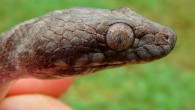
An international team of researchers from the United States and Madagascar has described a new, possibly microendemic, species of the snake genus Madagascarophis...

Aug 31, 2016 by News Staff

According to a study led by Dr. Attila Andics of the Eötvös Loránd University in Budapest, Hungary, dogs use the left hemisphere to process words and...

Aug 31, 2016 by News Staff

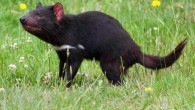
An international group of researchers has discovered that two regions in the genomes of Tasmanian devils (Sarcophilus harrisii) are changing in response...

Aug 26, 2016 by Enrico de Lazaro

For the first time, researchers have identified a multicomponent RNA virus – one containing different segments of genetic material in separate particles,...

Aug 22, 2016 by Natali Anderson

According to a team of botanists and dendrochronologists from the University of Arizona, Stockholm University and the University of Mainz, a pine growing...

Aug 17, 2016 by Natali Anderson

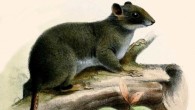
For the first time, scientists have sequenced and analyzed the nuclear and mitochondrial DNA of the Cameroon scaly-tail (Zenkerella insignis), one of Africa’s...

Aug 13, 2016 by Enrico de Lazaro

A team of scientists has described a new strikingly-colored species in the snake genus Geophis from the mountains of the Sierra Zongolica in west-central...

Aug 12, 2016 by Enrico de Lazaro

Greenland sharks (Somniosus microcephalus) live at least as long as 400 years, according to a team of marine biologists led by Dr. Julius Nielsen from...

Aug 8, 2016 by News Staff

A team of scientists led by Prof. Stacey Harmer of the University of California, Davis, has discovered how sunflowers use their circadian clock, acting...

Jul 29, 2016 by News Staff

A group of Japanese entomologists has described and named four new species of the ant genus Pheidole from the tropical rainforests of Papua New Guinea...

Jul 28, 2016 by News Staff

Rocky, an eleven-year-old male orangutan living at Indianapolis Zoo, offers clues to how human speech evolved, according to new research led by Durham...

Jul 27, 2016 by Natali Anderson

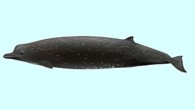
An international team of marine biologists has found genetic evidence of a previously unknown species of beaked whale (Berardius sp.nov.) that ranges from...

Jul 26, 2016 by News Staff

New research is casting doubt on a widely held belief about how cells use DNA to make proteins. DNA molecule. Image credit: Christoph Bock, Max Planck...

Jul 20, 2016 by Enrico de Lazaro

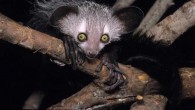
In the first controlled study of its kind, a team of scientists at Dartmouth College has found that two species of non-human primates – the slow loris...