Biology News

Jul 19, 2016 by Enrico de Lazaro

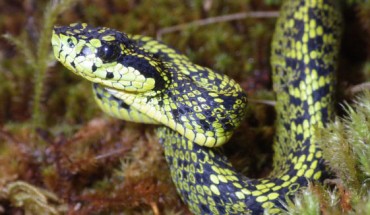
An international team of researchers led by University of Central Florida biologist Chris Parkinson has announced the discovery of a new species of venomous pitviper from Costa Rica. Talamancan palm-pitvipers (Bothriechis nubestris) are found in trees where their green and black pattern provides excellent camouflage. Image credit: University of Central Florida. Prof. Parkinson and co-authors chose the scientific name Bothriechis nubestris for the...


Jul 15, 2016 by News Staff

Daily infusions with serotonin, a naturally-occurring chemical associated with feelings of happiness, were shown to increase calcium levels in both the...

Jul 14, 2016 by News Staff

In a new study published in the journal eLife, scientists apply big-data analysis to reveal the full extent of viruses’ impact on the evolution of humans...

Sunflowers. Image credit: Betty Jo Tindle / CC BY-SA 3.0. The one fact about plants that most people probably remember from school is that they use sunlight...

Jul 13, 2016 by Natali Anderson

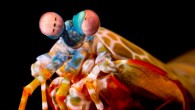
The eye-rolling behavior of mantis shrimp helps them see the world, says a team of biologists led by Nicholas Roberts of the University of Bristol, UK. Mantis...

Jul 12, 2016 by News Staff

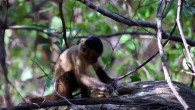
Wild Brazilian bearded capuchin monkeys (Sapajus libidinosus) use stones to pound open defended food, including cashew nuts. And this activity dates back...

Jul 6, 2016 by Enrico de Lazaro

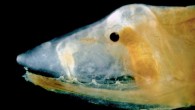
Venom is so useful to fish that it evolved at least 18 times, according to a new study led by Dr. William Leo Smith of the University of Kansas Biodiversity...

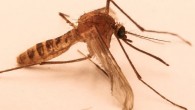
Culex pipiens f. molestus, the mosquito species unique to the London Underground. Image credit: Walkabout12 / CC BY-SA. When scientists examine the impact...

Jun 30, 2016 by Enrico de Lazaro

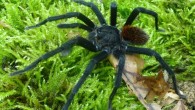
A relatively large species of tarantula discovered in an isolated mountain range in Colombia has been named after the famed Colombian novelist and 1982...

Jun 22, 2016 by Natali Anderson

Wild boars (Sus scrofa) and warthogs (Phacochoerus africanus) have an internal magnetic compass that helps them orient themselves as they forage for food...

Jun 22, 2016 by News Staff

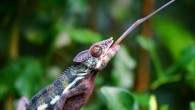
The viscosity of the mucus secreted at the tip of a chameleon’s tongue is about 400 times higher than that of human saliva, according to a team of scientists...

Jun 21, 2016 by News Staff

Small water molecules control protein motion, a new study published in the Proceedings of the National Academy of Sciences has found. According to Zhong...

Jun 20, 2016 by News Staff

Scientists from Canada and the United States have discovered a new species of Greater Antillean anole lizard in the Dominican Republic, on the Caribbean...

Jun 15, 2016 by News Staff

Cats understand some elements of physics and the cause-and-effect principle, says a new study led by Kyoto University researcher Saho Takagi. Combining...

Jun 14, 2016 by News Staff

A new study led by Vanderbilt University scientist Dr. Suzana Herculano-Houzel has found that birds have significantly more neurons packed into their brains...

Jun 7, 2016 by News Staff

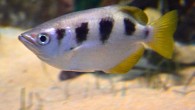
The archerfish (Toxotes chatareus), a species of freshwater tropical fish, can recognize individual people’s faces, shows a new study published in the...

Jun 3, 2016 by Natali Anderson

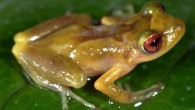
A new species of the genus Pristimantis (rain frogs) has been discovered in southeastern Peru by an international team of scientists. Pristimantis pluvialis,...

May 31, 2016 by News Staff

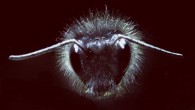
Mechanosensory hairs may explain how bumblebees sense electric signals transmitted by flowers, says a team of scientists at the University of Bristol,...

May 30, 2016 by News Staff

Blue-green egg color shields bird embryos from harmful sunlight, according to Dr. David Lahti from the City University of New York and Dr. Dan Ardia from...

May 30, 2016 by Natali Anderson

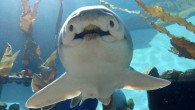
Sharks of the same species can have different personalities, indicates a new study published in the Journal of Fish Biology. Port Jackson shark (Heterodontus...