A research team led by Max Planck Institute for Evolutionary Anthropology scientists has generated the high-quality genome assembly of a Denisovan using DNA from an ancient molar found at Denisova Cave. It belonged to a man who lived roughly 200,000 years ago — more than twice as long ago as the only previously sequenced Denisovan individual. The new genome is forcing the researchers to rethink when and where early human groups met, mingled and migrated across Asia.

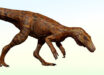
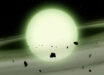
An artist’s concept of a Penghu Denisovan walking under the bright Sun during the Pleistocene of Taiwan. Image credit: Cheng-Han Sun.
Dr. Stéphane Peyrégne, an evolutionary geneticist at the Max Planck Institute for Evolutionary Anthropology, and his colleagues recovered the genome of a Denisovan from a molar unearthed at Denisova Cave in the Altai Mountains of southern Siberia — the same site where Denisovans were first identified in 2010 through DNA analysis of a finger bone.
The cave has since become a cornerstone of human evolutionary research, revealing repeated occupations by Denisovans, Neanderthals and even the child of parents from both groups.
“Denisovans, an extinct human group, were first identified based on ancient DNA extracted from Denisova 3, a finger phalanx discovered at Denisova Cave in the Altai Mountains of Siberia in 2008,” Dr. Peyrégne and co-authors said.
“Analysis of the nuclear genome from this individual revealed that Denisovans were a sister group to Neanderthals, another group of now extinct humans who lived in Western Eurasia in the middle and late Pleistocene.”
“While twelve fragmentary remains and one cranium have since been attributed to Denisovans based on DNA or protein analysis, only Denisova 3 has yielded a high-quality genome.”
The newly-analyzed tooth belonged to a male Denisovan who lived about 200,000 years ago, at a time when modern humans had not yet left Africa.
“In 2020, a complete left upper molar was found in layer 17, one of the lowest cultural layers of the South Chamber of Denisova Cave, dated to 200,000-170,000 years ago by optically stimulated luminescence,” the scientists explained.
“Designated as Denisova 25, this molar is similar in size to the other molars discovered at Denisova Cave, Denisova 4 and Denisova 8, and larger than those of Neanderthals as well as most other Middle Pleistocene and later hominins, suggesting that it potentially belonged to a Denisovan.”
“Two samples of 2.7 and 8.9 mg were removed by drilling one hole at the cemento-enamel junction of the tooth, and twelve subsamples, ranging from 4.5 to 20.2 mg, were obtained by gently scratching the outer layer of one of the roots with a dentistry drill.”
Thanks to exceptional DNA preservation, the authors were able to reconstruct the genome of Denisova 25 at high coverage, making it comparable in quality to the genome of the 65,000-year-old Denisova 3 woman.

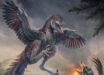
Denisovans were probably dark-skinned, unlike the pale Neandertals. The picture shows a Neanderthal man. Image credit: Mauro Cutrona.
Comparing the two genomes revealed that Denisovans were far from a single, stable population.
Instead, at least two distinct Denisovan groups occupied the Altai region at different times, with one replacing another over thousands of years.
The older Denisovan also carried more Neanderthal DNA than the later one, showing that interbreeding between these archaic humans happened repeatedly — not as rare accidents, but as a recurring feature of life in Ice Age Eurasia.
Even more striking, the team found evidence that Denisovans themselves mixed with an even older, ‘super-archaic’ hominin population that split from the human family tree before the ancestors of Denisovans, Neanderthals and modern humans diverged.
“Using this second Denisovan genome has shown that there was recurrent mixing between Neanderthals and Denisovans in the Altai region, but that these mixed populations were replaced by Denisovans from elsewhere, supporting the idea that Denisovans were widespread and that the Altai may have been at the edge of their geographic range,” the researchers said.
The Denisova 25 genome also helps resolve a long-standing puzzle about Denisovan ancestry in people living today.
Modern populations in Oceania, parts of South Asia and East Asia all carry Denisovan DNA — but not the same kind.
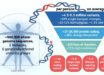
By comparing Denisovan genetic segments in thousands of present-day genomes, the scientists identified at least three distinct Denisovan sources.
One group, closely related to the later Denisovan genome, contributed ancestry widely across East Asia and beyond.
A second, more deeply divergent Denisovan population contributed DNA independently to the ancestors of Oceanians and to South Asians.
Crucially, East Asians do not carry this deeply divergent Denisovan ancestry, suggesting their ancestors took a different migration route into Asia — likely from the north — while the ancestors of Oceanians moved through South Asia earlier.
“Neanderthal-like DNA segments are shared among all populations, including Oceanians, consistent with a single out-of-Africa event, but independent Denisovan gene flows suggest multiple migrations into Asia,” the scientists said.

A portrait of a juvenile female Denisovan based on a skeletal profile reconstructed from ancient DNA methylation maps. Image credit: Maayan Harel.
According to the team, some Denisovan genetic variants were likely beneficial and rose to high frequency in modern humans through natural selection.
Using the two Denisovan genomes, the authors identified dozens of regions in today’s populations that appear to have been shaped by Denisovan introgression, particularly in Oceania and South Asia.
Other Denisovan genetic changes offer tantalizing clues to what these ancient humans may have looked like.
Several Denisovan-specific mutations affect genes linked to cranial shape, jaw projection and facial features — traits that align with the limited fossil evidence attributed to Denisovans.
One regulatory change sits near FOXP2, a gene involved in brain development and speech and language in modern humans, raising new questions about Denisovan cognition — though the researchers caution that genetic hints cannot substitute for direct fossil or archaeological evidence.
“The effects of introgressed Denisovan alleles on modern human phenotypes may also provide some hints into Denisovan biology,” the researchers said.
“Using alleles that have been associated with phenotypes in modern humans, we identified 16 associations with 11 Denisovan alleles, including height, blood pressure, monocyte count, and levels of cholesterol, hemoglobin and C-reactive protein.”
“We also identified 305 expression quantitative trait loci (QTL) and 117 alternative splicing QTL affecting gene expression in modern humans across nineteen tissues, the strongest effects include eQTLs in thyroid, arterial tibial, testis and muscle.”
“These molecular effects can be leveraged to explore further phenotypes not preserved in the fossil record, and this updated catalogue provides a more reliable basis for exploring Denisovan traits, adaptations, and disease susceptibilities, some of which may have been contributed to present-day humans through admixture.”
A preprint of the team’s paper was posted on bioRxiv.org on October 20, 2025.
_____
Stéphane Peyrégne et al. 2025. A high-coverage genome from a 200,000-year-old Denisovan. bioRxiv, doi: 10.1101/2025.10.20.683404