Paleontology News

Oct 4, 2012 by Enrico de Lazaro

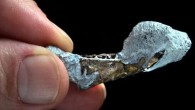
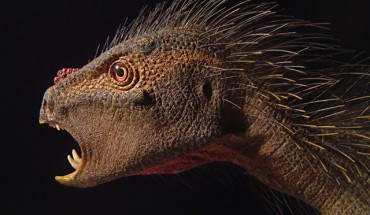
A professional paleontologist studying fossils in a collection at Harvard University has identified a new species of dinosaur. The newly discovered species, named Pegomastax africanus, or ‘thick jaw from Africa,’ has a short parrot-shaped beak up front, a pair of stabbing canines, and tall teeth tucked behind for slicing plants. The tall teeth in upper and lower jaws operated like self-sharpening scissors, with shearing wear facets that slid...

Sep 26, 2012 by Enrico de Lazaro

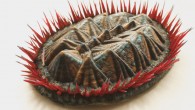
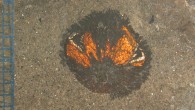
An international team of scientists has created a lifelike reconstruction of a multiplacophoran, an ancient mollusk that lived about 390 million years...

Sep 25, 2012 by Enrico de Lazaro

Scientists at the University of Washington suggest that early microbes might have been widespread on land, producing oxygen and weathering pyrite, an iron...

Sep 24, 2012 by Sergio Prostak

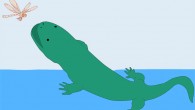
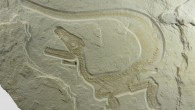
German researchers have discovered that the oldest known giant salamander Aviturus exsecratus was able to live on land as well as in water. An artist’s...

Sep 12, 2012 by Enrico de Lazaro

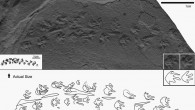
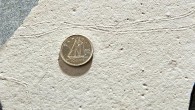
An amateur paleontologist has discovered the world’s smallest known fossil vertebrate footprints at the Joggins Fossil Cliffs, a 689 ha paleontological...

Aug 30, 2012 by Sergio Prostak

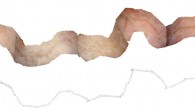
According to an international team of paleontologists, a 9.7-meter-long mortichnia of a horseshoe crab unearthed at a famous fossil locality in Germany...

Aug 28, 2012 by News Staff

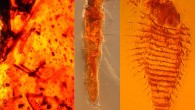
One fly and two mites found in droplets of amber from northeastern Italy are about 100 million years older than any other amber arthropod – invertebrate...

Aug 23, 2012 by Sergio Prostak

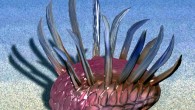
University of Toronto graduate student Martin Smith has for the first time reconstructed mouthparts of two mollusk-like animals Odontogriphus and Wiwaxia...

Aug 18, 2012 by Enrico de Lazaro

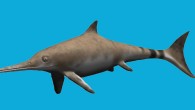
A study by Melbourne University researcher Prof John Hayman shows that some ancient marine animals, including ichthyosaurs, giant dolphin-like reptiles...

Aug 15, 2012 by Sergio Prostak

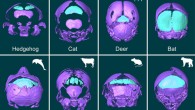
A new study led by Zurich University researchers sheds light on the origin of a puzzling skull bone, known as the interparietal, in humans and all other...

Aug 6, 2012 by Enrico de Lazaro

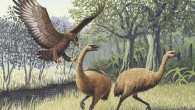
Scientists have used ancient DNA from bones of giant extinct New Zealand birds to show that significant climate and environmental changes did not have...

Aug 2, 2012 by News Staff

Baobab and palm trees once thrived on today’s icy coasts of Antarctica about 52 million years ago, a new study led by the Goethe University and the...

Jul 27, 2012 by Enrico de Lazaro

A survey of the extensive fruit and seed collections from the Middle Eocene of the Messel fossil site in Germany has revealed 140 genera, representing...

Jul 24, 2012 by News Staff

An international team of paleontologists has discovered two ancient species of South American rodents, including the oldest chinchilla, a discovery that...

Jul 16, 2012 by Enrico de Lazaro

An international group of researchers led by the University of Bristol has used computed tomography and biomechanical modeling to show how plant-eating...

Jul 3, 2012 by News Staff

An international team of paleontologists has discovered a new species of feathered dinosaur in southern Germany. Skeleton of Sciurumimus on a limestone...

Jul 2, 2012 by News Staff

A team of researchers from the University of Alberta and the Universidad de la República in Uruguay has uncovered physical proof that animals existed...

Jun 29, 2012 by News Staff

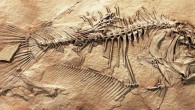
A new fish fossil from the lower Eocene found by Oxford University researcher Dr Matt Friedman has revealed why flatfishes have one of the most unusual...

Jun 22, 2012 by Sergio Prostak

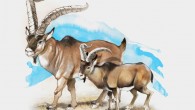
Three skull fossils of Capra pyrenaica pyrenaica, one of the two subspecies of the Iberian wild goat, from between 4,000 and 7,000 years ago have shed...

Jun 15, 2012 by News Staff

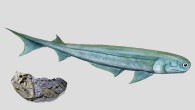
Re-analysis of the braincase of Acanthodes bronni has revealed that this 290-million-year-old fossil fish resembled a shark. The fossilized braincase...