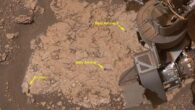
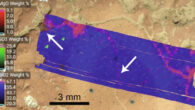
Using data from the ChemCam instrument on NASA’s Curiosity rover, planetary scientists found minerals with high amounts of iron, manganese, and zinc...
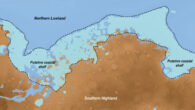
A continent-like shelf beneath the Martian surface hints that a vast ocean once covered up to a third of Mars, reshaping the long-running debate over its...
New findings from Neretva Vallis, an ancient river channel that once transported water into Jezero crater on Mars, reveal unusually high nickel levels...
A new analysis of isotopic signatures across planets and meteorite parent bodies suggests our home world formed entirely from inner solar system material,...
Earlier work has demonstrated that an extremophile bacterium species called Deinococcus radiodurans can survive the radiation, cold, and desiccation associated...
New orbital data reveal that the most recently active volcanic systems on Mars weren’t simple one-off blasts into space; instead, long-lived magmatic...
Known non-biological sources, from meteorites to surface chemistry, fall short of accounting for organic compounds detected by NASA’s Curiosity rover,...
Mars almost certainly once held abundant water. Until now, observations have shown that most atmospheric water loss occurs during the Red Planet’s southern...
NASA’s Perseverance rover has discovered several thousand small, light-toned rock fragments, or float rocks, with some exhibiting spectral signatures...
Using data captured by the SuperCam microphone aboard NASA’s Perseverance rover over two Martian years, planetrary scientists have detected 55 triboelectric...
The new ultraviolet (UV) images from the Imaging Ultraviolet Spectrograph (IUVS) camera aboard NASA’s MAVEN (Mars Atmosphere and Volatile EvolutioN)...
The new images from the High Resolution Imaging Science Experiment camera onboard NASA’s Mars Reconnaissance Orbiter will allow astronomers to better...
Thanks to the data collected by the Colour and Stereo Surface Imaging System (CaSSIS) onboard ESA’s Trace Gas Orbiter (TGO) spacecraft orbiting Mars,...
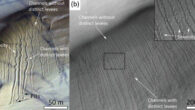
On some of the dune fields on Mars, parallel channels, called linear dune gullies, are found. Contrary to their name these gullies are often highly sinuous....
Exploring the possibility of the survival of life under extraterrestrial conditions is an important goal of astrobiology. In a new study, scientists used...
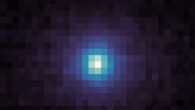
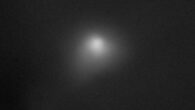
During its closest approach to Mars on October 3, 2025, 3I/ATLAS was 30 million km away from ESA’s ExoMars Trace Gas Orbiter (TGO).
This image of the...
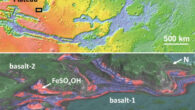
The newly-discovered mineral, named ferric hydroxysulfate, provides clues about the environment and history of the Red Planet, including the possibility...