Biology News

Mar 8, 2017 by News Staff

A new study published in the journal Proceedings of the National Academy of Sciences reveals the link between breeding season and the hormone melatonin, made in the pineal gland in the brain during long winter nights. Castle-Miller et al have discovered how animals link the change in seasons to their fertility. “Changes during the year in sex hormones made in the pituitary gland control when mammals start reproducing, and other changes like growing...

Mar 7, 2017 by News Staff

The True’s beaked whale (Mesoplodon mirus) is a poorly known member of the family Ziphiidae, second largest family of cetaceans (which includes whales,...

Mar 7, 2017 by News Staff

Brazilian taxonomists have discovered and described three new species of the ‘bird-eating’ tarantula genus Avicularia from Ecuador, Peru and Brazil. Avicularia...

Mar 6, 2017 by News Staff

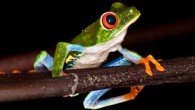
Frogs have the ability to see color even when it is so dark that humans are not able to see anything at all, according to a new study published in the...

Mar 2, 2017 by News Staff

A new study published in the journal PLoS ONE has revealed that wild African elephants (Loxodonta africana) sleep an average of two hours a day and regularly...

Feb 24, 2017 by News Staff

According to a new study by Yale School of Medicine researchers, fructose is converted in the human brain from glucose. The finding, published in the journal...

Feb 23, 2017 by News Staff

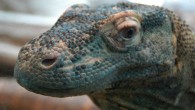
A team of researchers at the College of Science at George Mason University has detected 48 antimicrobial peptides in the blood plasma of Komodo dragons...

Feb 21, 2017 by Enrico de Lazaro

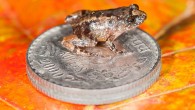
Seven new species of the genus Nyctibatrachus (Night frogs) have been discovered in the Western Ghats global biodiversity hotspot in India. Seven new species...

Feb 14, 2017 by News Staff

A study led by Carnegie Mellon University researchers provides the first biological evidence to explain how marriage impacts health. According to Brian...

Feb 8, 2017 by News Staff

A research team led by Scripps Research Institute scientist Dr. Supriya Srinivasan has identified a brain hormone that appears to trigger fat burning in...

Feb 7, 2017 by News Staff

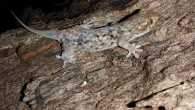
A bizarre new species of the fish-scale gecko genus Geckolepis has been found living in the ‘tsingy’ karst formations of northern Madagascar. Geckolepis...

Feb 6, 2017 by Natali Anderson

A new dwarf lemur species has been discovered in the dry and transitional forests of northern Madagascar, according to a paper published in the latest...

Feb 3, 2017 by News Staff

Using camera traps, primatologists from the Lukuru Foundation Tshuapa-Lomani-Lualaba (TL2) Project are the first to capture video footage of a previously...

Feb 2, 2017 by News Staff

According to a new study published in the Journal of the Royal Society Interface, a frog’s saliva is thick and sticky during prey capture, then turns...

Feb 2, 2017 by News Staff

A team of researchers at the University of Warwick, UK, has identified Connexin26 (Cx26) as a key molecule that reacts to carbon dioxide (CO2) in our bodies...

Jan 25, 2017 by News Staff

Researchers from the United States, China and France have created what they say is the world’s first stable semi-synthetic microorganism. The research...

Jan 19, 2017 by News Staff

A duo of researchers from the United States and Australia has used an imaging technique to reconstruct the brain architecture and neural networks of the...

Jan 16, 2017 by Natali Anderson

A team of marine biologists from Scripps Institution of Oceanography and the Western Australia Museum has captured on video the first-ever field sighting...

Jan 13, 2017 by Enrico de Lazaro

About 8% of the human genome is composed of endogenous retroviruses. According to a new study published in the journal Cell Reports, these retroviruses...

Jan 13, 2017 by Natali Anderson

A new species of hoolock gibbon has been discovered in eastern Myanmar and southwestern China by an international team of scientists from the United States,...