Biology News

Apr 26, 2017 by Enrico de Lazaro

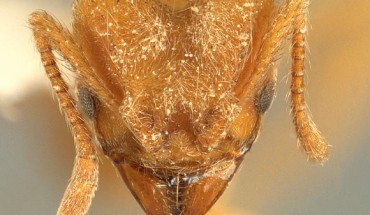
Three new species of the ant genus Sericomyrmex have been discovered in Brazil, Venezuela, Colombia, Ecuador and Peru. Sericomyrmex radioheadi, worker. Image credit: A. Ješovnik & T.R. Schultz, doi: 10.3897/zookeys.670.11839. The genus Sericomyrmex belongs to the fungus-farming ants (tribe Attini), a New World group of over 250 species, all of which cultivate fungus gardens for food. These ants provide the fungus with the substrate on which it...
Apr 25, 2017 by News Staff

An international team of researchers from Spain and the United Kingdom has found that a caterpillar of the greater wax moth (Galleria mellonella) —...

Apr 24, 2017 by News Staff

Deprived of oxygen, African naked mole-rats (Heterocephalus glaber) can survive by metabolizing a type of sugar called fructose just as plants do, a new...

Apr 21, 2017 by News Staff

A team of researchers at the University of Oxford’s Department of Zoology has shown that the elements of the capacity of humans to build on the work...

Apr 18, 2017 by News Staff

According to new research, Asian elephants (Elephas maximus) are able to recognize their own bodies as obstacles to success in problem-solving, further...

Apr 18, 2017 by News Staff

An international team of marine biologists, led by researchers at Northeastern University and the University of Utah, is the first to investigate a never...

Apr 11, 2017 by News Staff

Researchers from Austria and the United States have identified a group of giant viruses — Klosneuviruses — that harbor components of many other...

Apr 10, 2017 by Enrico de Lazaro

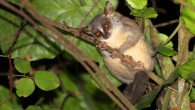
An international group of primatologists has discovered a new primate, Galagoides kumbirensis (Angolan dwarf galago), with features not been seen by science...

Apr 6, 2017 by News Staff

A new study by researchers at the University of Adelaide and Lund University that appears online today in the journal Scientific Reports suggests that...

Apr 5, 2017 by News Staff

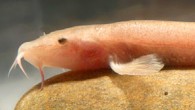
A team of scientists and cave divers has discovered and described the first European cave fish — a loach of the genus Barbatula. Loaches Barbatula...

Mar 30, 2017 by News Staff

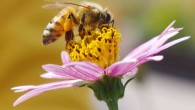
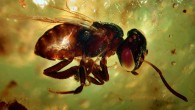
About 80 million years ago (Cretaceous period), a group of bees began exhibiting social behavior. Today, their descendants — honey bees, stingless...

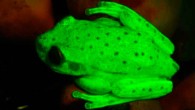
Scientists in Argentina have discovered a frog that glows in moonlight and at twilight. Fluorescence in terrestrial environments had previously only been...

Mar 27, 2017 by News Staff

Using video microscopy in a living mouse lung, a team of researchers at the Universities of California, San Francisco (UCSF) & Los Angeles (UCLA),...

Mar 23, 2017 by News Staff

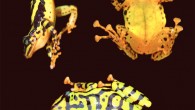
A species of frog that is completely new to science has been discovered in the cloud forests of Ecuador. The Ecuadorian rainfrog (Pristimantis ecuadorensis),...

Mar 22, 2017 by News Staff

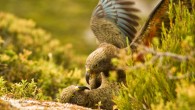
The kea (Nestor notabilis) — a large species of parrot endemic to the Southern Alps of New Zealand — has become the first non-mammal to show...

Mar 21, 2017 by News Staff

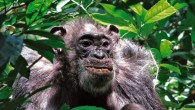
A 20-year demographic study of a relatively undisturbed and exceptionally large community of eastern chimpanzees (Pan troglodytes schweinfurthii) at Ngogo,...

Mar 20, 2017 by Sergio Prostak

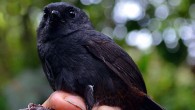
A new species of tapaculo — called the Tatama tapaculo (Scytalopus alvarezlopezi) — has been discovered in the cloud forests of Colombia’s...

Mar 15, 2017 by News Staff

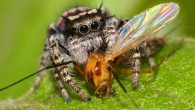
According to a new study published in The Science of Nature, the annual prey kill of the global spider community is in the range of 400-800 million metric...

Mar 14, 2017 by News Staff

After only nine generations, the same plant species is larger and more fragrant if pollinated by bumblebees rather than flies, according to University...

Mar 13, 2017 by News Staff

A study led by University of Tasmania researchers Cesar Tovar and Gregory Woods has shown that immunotherapy can cure Tasmanian devils (Sarcophilus harrisii)...