Featured News

Aug 15, 2025 by News Staff

In his new paper, Professor Jonathan Tan, an astrophysicist at the University of Virginia and the Chalmers University of Technology, proposes that Population III.1 supermassive stars were progenitors of supermassive black holes in the early Universe; high energy photons from the stars ionized the surrounding hydrogen gas far out into the pristine intergalactic medium, eventually engulfing a region that is millions of light-years in size; all supermassive...

Aug 14, 2025 by News Staff

Tiny, toothed mammalodontids were among the strangest of all whales. If alive today, they would be as iconically Australian as kangaroos. In a new paper...

Aug 13, 2025 by Enrico de Lazaro

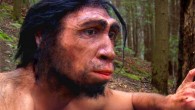
New hominin fossils recovered from the Ledi-Geraru Research Project area in the Afar region of Ethiopia suggest the presence of early Homo at 2.78 and...

Aug 11, 2025 by Enrico de Lazaro

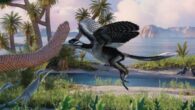
Paleontologists have identified a new species of dromaeosaurid dinosaur from an almost complete and articulated skeleton found in the 2000s in Mongolia. Life...

Aug 11, 2025 by News Staff

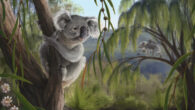
Paleontologists have identified the myriad of animals — saber-toothed predators, burrowing foragers and a large, salamander-like creature —...

Aug 8, 2025 by News Staff

This planet candidate, Alpha Centauri Ab, could be a gas giant, orbiting 1 to 2 times the distance between Sun and Earth, according to two papers to be...

Aug 7, 2025 by News Staff

Astronomers have identified and measured the most massive black hole to date, which tops out at a mass of 36 billion solar masses. This ultramassive black...

Aug 7, 2025 by News Staff

The dispersal of archaic hominins beyond mainland Southeast Asia (Sunda) represents the earliest evidence for humans crossing ocean barriers to reach isolated...

Aug 5, 2025 by Natali Anderson

Designated Stephenson 2 DFK 52, the newly-discovered red supergiant resides in the massive stellar cluster RSGC2. This image shows the red supergiant star...

Aug 4, 2025 by News Staff

Paleontologists have identified an unusual new genus and species of early-diverging plesiosauroid plesiosaur from a nearly complete skeleton found in the...

Aug 1, 2025 by Natali Anderson

Australian entomologists have described a spectacular new species of the stick insect genus Acrophylla from two female specimens as well as eggs. Holotype...

Jul 28, 2025 by Enrico de Lazaro

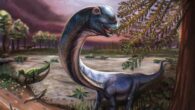
Paleontologists in Patagonia, Argentina, have unearthed a portion of a postcranial skeleton that belonged to a previously unknown rebbachisaurid sauropod...

Jul 23, 2025 by News Staff

Paleontologists have described a new genus and species of Triassic drepanosauromorph diapsid with striking integumentary appendages — which are neither...

Jul 23, 2025 by Natali Anderson

Named L 98-59f, this planet is a non-transiting super-Earth with a minimal mass of 2.8 Earth masses on a 23-day orbit inside the habitable zone of the...

Jul 23, 2025 by News Staff

First published in 1865 as a caterpillar, nearly fifty years before the discovery of Canada’s Burgess Shale, Palaeocampa anthrax shuffled between classifications...

Jul 21, 2025 by News Staff

Using the speckle imager ‘Alopeke on the Gemini North telescope, one half of NSF’s International Gemini Observatory, astronomers have captured direct...

Jul 18, 2025 by News Staff

The Solnhofen Archipelago is a series of islands that existed during the Late Jurassic epoch in what is now Bavaria, Germany. Life representation of Sphenodraco...

Jul 16, 2025 by News Staff

Astronomers using the Gemini North telescope at NSF’s International Gemini Observatory have captured 3I/ATLAS as it makes its temporary passage through...

Jul 15, 2025 by News Staff

Paleontologists have identified a new genus and species of mole (family Talpidae) from a partial skeleton discovered at the Pliocene-aged site of Camp...

Jul 15, 2025 by News Staff

Using twin detectors of NSF’s Laser Interferometer Gravitational-wave Observatory (LIGO), astrophysicists with the LIGO-Virgo-KAGRA (LVK) Collaboration...